In Conversation: Justin Kalanialiʻi Stoleson Reflects on the Third AGM
This year's AGM explored Indigenous perspectives on AI and its impact on our shared environment and all our relations.
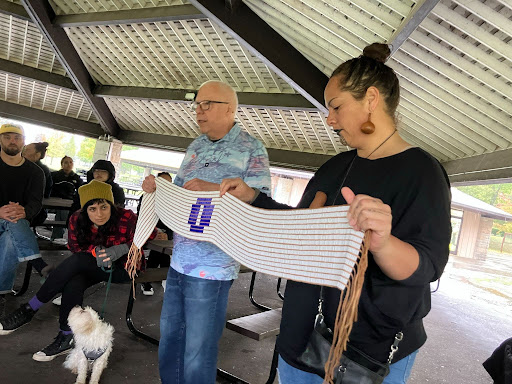
Photo provided by Justin Kalanialiʻi Stoleson from the visit to the Landscape of Nations in Niagara.
We followed up with Justin Kalanialiʻi Stoleson, Ka Hawaiʻi Pae ʻĀina Pod member and Abundant Intelligences funded researcher, to find out more about his experience at this year’s Annual General Meeting (AGM).
Tell us about your role at the AGM.
I attended the AGM as a member of the Ka Hawaiʻi Pae ʻĀina Pod, working specifically with the Hilo team on Automatic Speech Recognition for ʻŌlelo Hawaiʻi (Hawaiian Language).
What excited you about the AGM in the first place?
I was interested in the idea of various indigenous groups coming together to show their research and exchange knowledge on the application of emergent technology such as AI and machine learning to indigenous concerns and pursuits.
What aspects of the AGM contributed the most to your learning or growth?
I feel that being able to see what other Pods are working on, their problems and methods of addressing those problems, was very instructive. The presentations then served as points of inspiration that became a foundation for productive discussions with other AGM attendants. To me it was those opportunities for sharing and discussion that led to the most learning on my part.
What is the most valuable thing you gained from the trip? (e.g., new knowledge, new connections, inspiration, a set of skills, etc.)
I gained great connections with like-minded people from indigenous-based groups around the world. I think it’s really important to feel like you’re part of a larger movement or community of people that can provide mutual support and inspiration as we each build toward our respective goals.
How has your perspective and/or research approach changed as a result of the AGM?
I think attending the AGM has expanded my vision for potential applications of machine learning and AI towards end results that serve the preservation and expansion of indigenous knowledge. The creative brainstorming sessions near the end of the AGM helped with that. I’m thinking more on future possibilities and applications of our current project as a result of the AGM.
Has the AGM influenced any future actions or decisions you have taken or plan to take? If so, how?
The AGM has given me a more vested interest in the goal of steering AI towards indigenous and human ends. I hope to continue to be involved in the AbInt community as our ASR project comes to fruition and beyond into further applications. I believe that we as indigenous people have an important perspective on the application of AI and what it means not just for humans and our connections between each other (“the dish with one spoon”), but also for impacts on our shared environment and “all our relations.” I think we can and we ought to have a seat at the table as these technologies develop.
If you could describe the overall impact of the AGM in one sentence, what would you say?
AGM is an incredible opportunity for innovators in indigenous communities to join together, make meaningful connections, and collectively dream of and build indigenous-led AI futures for our nations and our island earth.
By:
Robbie Wing
Date:
October 20, 2025
Location:
Ontario and Western University
In Conversation: Justin Kalanialiʻi Stoleson Reflects on the Third AGM
By:
Robbie Wing
Date:
October 20, 2025
Location:
Ontario and Western University
This year's AGM explored Indigenous perspectives on AI and its impact on our shared environment and all our relations.
Photo provided by Justin Kalanialiʻi Stoleson from the visit to the Landscape of Nations in Niagara.
We followed up with Justin Kalanialiʻi Stoleson, Ka Hawaiʻi Pae ʻĀina Pod member and Abundant Intelligences funded researcher, to find out more about his experience at this year’s Annual General Meeting (AGM).
Tell us about your role at the AGM.
I attended the AGM as a member of the Ka Hawaiʻi Pae ʻĀina Pod, working specifically with the Hilo team on Automatic Speech Recognition for ʻŌlelo Hawaiʻi (Hawaiian Language).
What excited you about the AGM in the first place?
I was interested in the idea of various indigenous groups coming together to show their research and exchange knowledge on the application of emergent technology such as AI and machine learning to indigenous concerns and pursuits.
What aspects of the AGM contributed the most to your learning or growth?
I feel that being able to see what other Pods are working on, their problems and methods of addressing those problems, was very instructive. The presentations then served as points of inspiration that became a foundation for productive discussions with other AGM attendants. To me it was those opportunities for sharing and discussion that led to the most learning on my part.
What is the most valuable thing you gained from the trip? (e.g., new knowledge, new connections, inspiration, a set of skills, etc.)
I gained great connections with like-minded people from indigenous-based groups around the world. I think it’s really important to feel like you’re part of a larger movement or community of people that can provide mutual support and inspiration as we each build toward our respective goals.
How has your perspective and/or research approach changed as a result of the AGM?
I think attending the AGM has expanded my vision for potential applications of machine learning and AI towards end results that serve the preservation and expansion of indigenous knowledge. The creative brainstorming sessions near the end of the AGM helped with that. I’m thinking more on future possibilities and applications of our current project as a result of the AGM.
Has the AGM influenced any future actions or decisions you have taken or plan to take? If so, how?
The AGM has given me a more vested interest in the goal of steering AI towards indigenous and human ends. I hope to continue to be involved in the AbInt community as our ASR project comes to fruition and beyond into further applications. I believe that we as indigenous people have an important perspective on the application of AI and what it means not just for humans and our connections between each other (“the dish with one spoon”), but also for impacts on our shared environment and “all our relations.” I think we can and we ought to have a seat at the table as these technologies develop.
If you could describe the overall impact of the AGM in one sentence, what would you say?
AGM is an incredible opportunity for innovators in indigenous communities to join together, make meaningful connections, and collectively dream of and build indigenous-led AI futures for our nations and our island earth.