

Back to news
Abundant Intelligences Integration Series: Epistemological Foundations Conversation
Artificial Intelligence
The Epistemological Foundations Conversations feature members of the Abundant Intelligences research team sharing how the knowledge frameworks in their field are constructed, validated, and employed. Our second EF Conversation features Prof. Yoshua Bengio (UdM & Mila), Keoni Mahelona (Te Hiku Media), and Prof. Blake Richards (McGill & Mila).
Integrating Indigenous Knowledges with the knowledge systems that underlie AI research is fraught with epistemic challenges. Fundamental questions about what counts as knowledge, how we validate that knowledge, and how we act on it become acute when such different frameworks for engaging the world come into relationship with one another. For instance, much Indigenous Knowledge resides in cultural practices such as stories and songs, with an insistence on retaining the complexity of lived experience. This can make them seem unruly when viewed from a Western scientific framework that prioritizes climbing a ladder of abstraction to reach simple universal principles. A major goal of the Conversation Series is to address these discrepancies so as to synchronize expertise, methodologies, and goals that reside within the Abundant Intelligences Research Program.
Event
Impact
Conference / panel
Speakers:
Keoni Mahelona
Karim Jerbi
Yoshua Bengio
Jason Edward Lewis
Date:
2024-02-12
Location:
Canada
Featured People

Keoni Mahelona
Keoni Mahelona is the Chief Technology Officer at Te Hiku Media and a leading practitioner of Indigenous data sovereignty. Originally from Anahola on the island of Kauaʻi, Hawaiʻi, Keoni has been living and working in Te Hiku o Te Ika for over 10 years having first arrived in Aotearoa as a Fulbright Scholar. As a driving force behind the development of digital innovation projects that seek to secure the future of te reo Māori and other indigenous languages, Keoni makes decisions every day to protect the sovereignty of Māori data, from the digital tools employed to advance projects, the storage of data and sharing data in appropriate and secure ways. Mahelona works at THM building innovative Te Reo Māori speech recognition tools. He will contribute his experience building NLP technology from within a framework of strengthening Indigenous data sovereignty.
Karim Jerbi
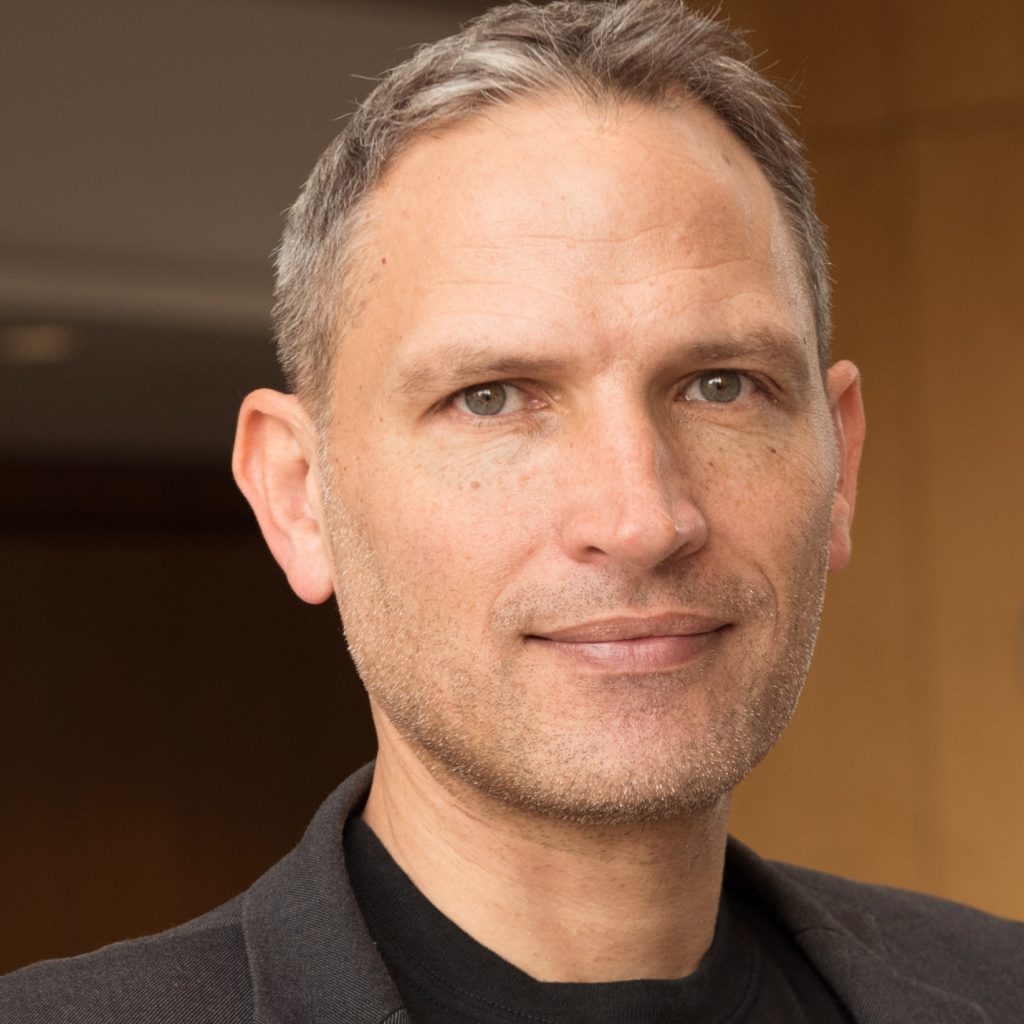
Karim Jerbi is a Professor in the Department of Psychology at the University of Montreal, where he holds a Canada Research Chair (Tier 2) in Computational Neuroscience and Cognitive Neuroimaging. He is the Director of UNIQUE, the Quebec-wide Neuro-AI Research Center, and an Associate Professor at Mila, the Quebec AI research institute. Dr. Jerbi earned a PhD in Cognitive Neuroscience and Brain Imaging from Pierre and Marie Curie University in Paris and holds a degree in Biomedical Engineering from the University of Karlsruhe, Germany. His research sits at the intersection of cognitive, computational, and clinical neuroscience. The work conducted in his laboratory focuses on elucidating the role of neural oscillations and large-scale brain communication in cognition—including decision-making, attention, consciousness, and creativity—and on investigating brain network alterations in psychiatric and neurological disorders. His multidisciplinary research program combines advanced brain-imaging methods, such as magnetoencephalography (MEG) and scalp and intracranial electroencephalography (EEG), with state-of-the-art signal processing, computational modeling, and data analytics, including machine learning. Dr. Jerbi also has a strong interest in the convergence of neuroscience, artificial intelligence, and art, as well as in promoting justice within and beyond the scientific community. In his role as Director of the UNIQUE Neuro-AI Research Center at Université de Montréal, Dr. Jerbi contributes expertise on the intersections of cognitive, computational, and clinical neuroscience, and on how knowledge frameworks from diverse cultural contexts shape our understanding of intelligent action.
Yoshua Bengio
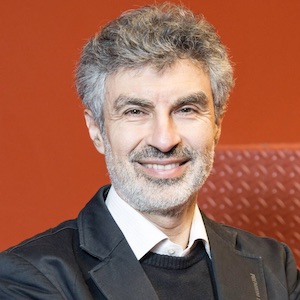
Recognized worldwide as one of the leading experts in artificial intelligence, Yoshua Bengio is most known for his pioneering work in deep learning, earning him the 2018 A.M. Turing Award, “the Nobel Prize of Computing,” with Geoffrey Hinton and Yann LeCun. He is a full professor at Université de Montréal, and the founder and scientific advisor of Mila – Quebec AI Institute. He is also a senior fellow at CIFAR and co-directs its Learning in Machines & Brains program, serves as special advisor and founding scientific director of IVADO, and holds a Canada CIFAR AI Chair. In 2018, he collected the largest number of new citations in the world for a computer scientist and in 2019 was awarded the prestigious Killam Prize. Since 2022 he has the largest h-index impact factor in computer science, worldwide. He is a Fellow of both the Royal Society of London and Canada and Officer of the Order of Canada. Concerned about the social impact of AI and the objective that AI benefits all, he actively contributed to the Montreal Declaration for the Responsible Development of Artificial Intelligence. He will contribute foundational expertise in Deep Learning (DL).
Jason Edward Lewis
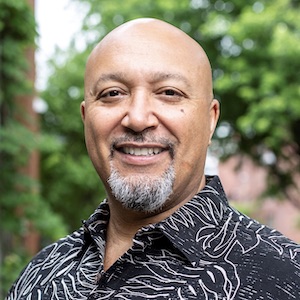
Jason Edward Lewis is a digital media theorist, poet, and software designer. He founded Obx Laboratory for Experimental Media, where he conducts research/creation projects exploring computation as a creative and cultural material. Lewis is deeply committed to developing intriguing new forms of expression by working on conceptual, critical, creative and technical levels simultaneously. He is the University Research Chair in Computational Media and the Indigenous Future Imaginary as well Professor of Computation Arts at Concordia University. Lewis was born and raised in northern California, and currently lives in Montreal.