

Back to news
Abundant Intelligences Integration Series: Epistemological Foundations Conversation
Indigenous Theory and Methodology
The Epistemological Foundations Conversations feature members of the Abundant Intelligences research team sharing how the knowledge frameworks in their field are constructed, validated, and employed.
Integrating Indigenous Knowledges with the knowledge systems that underlie AI research is fraught with epistemic challenges. Fundamental questions about what counts as knowledge, how we validate that knowledge, and how we act on it become acute when such different frameworks for engaging the world come into relationship with one another. For instance, much Indigenous Knowledge resides in cultural practices such as stories and songs, with an insistence on retaining the complexity of lived experience. This can make them seem unruly when viewed from a Western scientific framework that prioritizes climbing a ladder of abstraction to reach simple universal principles. A major goal of the Conversation Series is to address these discrepancies so as to synchronize expertise, methodologies, and goals that reside within the Abundant Intelligences Research Program.
Epistemological Foundations Conversation Series
This only shows up because there is something written in the Epistemological Foundations Conversation Series’ category’s description.
Event
Conference / panel
Speakers:
Linda Tuhiwai Smith
Leroy Little Bear
Manulani Aluli Meyer
Hēmi Whaanga
Jason Edward Lewis
Date:
2023-12-13
Location:
Canada
Featured People
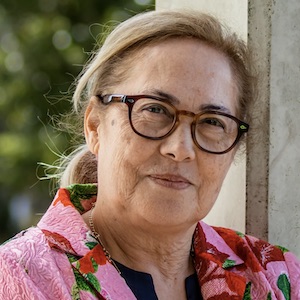
Linda Tuhiwai Smith
Dr. Linda Tuhiwai Te Rina Smith (Fellow, Royal Society New Zealand) is Distinguished Professor at Te Whare Wānanga o Awanuiārangi. Her academic career is grounded in her love of teaching and research that makes a transformative difference in Māori, Indigenous, and diverse other communities. She was the founding Co-Director of New Zealand’s Māori Centre of Research Excellence Nga Pae o Te Māramatanga and implemented a national support programme to develop 500 Māori doctoral graduates within 5 years, which has exceeded its target by 200% and seen the first program graduates become leading researchers and directors of various centres of excellence. Previously, she was the Pro-Vice Chancellor Māori, Dean of the School of Māori and Pacific Development and Director of Te Kotahi Research Institute at the University of Waikato. Smith is the author of Decolonizing Methodologies, one of the seminal texts in Indigenous studies, decolonial studies, and research methodology. Smith’s research is trans-disciplinary with a recognized international reputation in Indigenous education, Indigenous health, and decolonizing research methodologies. She has served on several Cabinet-appointed high-level advisory boards and has considerable public sector governance experience. She has held various leadership roles in transdisciplinary projects based in strong community engagements since the late 1980s. She is author of Decolonizing Methodologies, which articulates a framework for Indigenous people to undertake research on their own terms and to the benefit of their communities. Her scholarly work inspired and sustains ongoing efforts to re-centre Māori and Indigenous knowledge practices within the academy and in relationship to community. A member of Hiringa te Mahara, she will contribute to the project’s understanding of how to integrate Indigenous and Western research and research-creation methodologies.
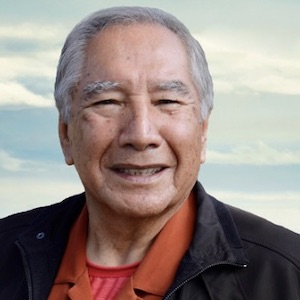
Leroy Little Bear
Leroy Little Bear (Blackfoot) is Professor Emeritus at the University of Lethbridge, founding member of Canada’s first Native American Studies Department, former Director of the Harvard University Native American Program, and recipient of the National Aboriginal Achievement Award for Education. Little Bear is a founding member of Canada’s first Native American Studies Department, at the University of Lethbridge, where he remained as a researcher, faculty member and department chair until his official retirement in 1997. In recent years Little Bear has continued his influential work as an advocate for First Nations education. From January 1998 to June 1999 he served as Director of the Harvard University Native American Program. Upon his return to Canada, he was instrumental in the creation of a Bachelor of Management in First Nations Governance at the University of Lethbridge – the only program of its kind in the country. In the spring of 2003, Little Bear was awarded the prestigious National Aboriginal Achievement Award for Education, the highest honour bestowed by Canada’s First Nations community. He has served as a consultant to local and national organizations including the Blood Tribe, Indian Association of Alberta and the Assembly of First Nations of Canada. His notable reputation has also earned him a place on numerous government commissions and boards including the Task Force on the Criminal Justice and Its Impact on the Indian and Métis Peoples of Alberta (1990-91). Little Bear’s legal advice is widely sought on such significant issues as land claims, treaties, and hunting and fishing rights. Little Bear is the co-author of several books on self-government and Aboriginal rights, including “Pathways to Self Determination”, “Quest For Justice”, and “Governments in Conflict”. His credits also include a variety of influential articles such as, “A concept of Native Title”, which was cited in a Canadian Supreme Court decision. He received an Honourary Doctor of Arts and Science degree from the University of Lethbridge, an Honourary Doctor of Laws degree from the University of Northern British Columbia, was recognized as an Eminent Scholar (Honourary) by the Blood Reserve and received an Urban Aboriginal Lifetime Achievement Award from the Aboriginal Council of Lethbridge. He was also inducted into the Alberta Order of Excellence in 2016. Currently, he co-leads the Niitsitapi Pod with Amethyst First Rider.
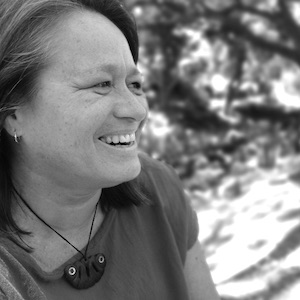
Manulani Aluli Meyer
Manulani Aluli Meyer is the fifth daughter of Emma Aluli and Harry Meyer and grew up on the sands of Mokapu and Kailua Beach on the island of O‘ahu. She comes from the Aluli ‘ohana, a large and diverse family of scholar-activists committed to Hawaiian education, justice, land reclamation, law, health, cultural revitalization, arts education, prison reform, food sovereignty, transformational economics, and music. She works in the field of Indigenous epistemology and its role in global awakening. She earned her doctorate in Philosophy of Education from Harvard University (Ed.D., 1998) and is a sought-after keynote speaker, writer, and international evaluator of Indigenous PhD programs. Her seminal book, Ho‘oulu: Our Time of Becoming, is now in its third printing. Her background also includes wilderness education, coaching, and experiential learning. She has served as an instructor for Outward Bound, a coach for the Special Olympics, and a cheerleader for the Hawaiian Charter School movement. She has held an Associate Professor position in Education at the University of Hawai‘i at Hilo and spent five years in New Zealand as the lead designer and teacher for He Waka Hiringa, an innovative Master’s program in Applied Indigenous Knowledge at Te Wānanga o Aotearoa, the largest Māori university, serving over 30,000 students. Dr. Aluli-Meyer currently serves as the Konohiki for Kūlana o Kapolei, a Hawaiian Place of Learning at the University of Hawai‘i–West O‘ahu. She has made foundational contributions to Indigenous epistemologies, and her expertise in integrating Indigenous and Western knowledge systems will inform the project’s approach to cross-cultural research and learning.
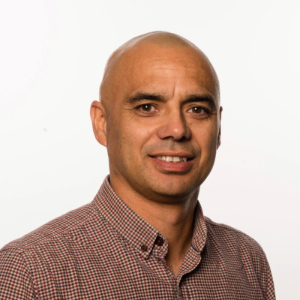
Hēmi Whaanga
Dr. Hēmi Whaanga is a Professor and Head of Massey University’s School of Te Pūtahi-a-Toi – School of Māori Knowledge. He has worked as a project leader and researcher on a range of projects centred on the revitalization and protection of Māori language and knowledge (including Mātauranga Māori, digitization of indigenous knowledge, ICT and indigenous knowledge, ethics, traditional ecological knowledge, language revitalisation, Māori astronomy, and linguistics). He affiliates to Ngāti Kahungunu through his father, and Ngāi Tahu, Ngāti Mamoe and Waitaha through his mother.
Professor Whaanga is recognized as a leading scholar researching the revitalization, protection, distribution, and development of Māori knowledge and language, and incorporating mixed-method approaches, processes, and technologies to analyze, develop, present, and protect new and sacred knowledge in different linguistic, cultural, ethical, and digital contexts. His leadership in Māori digital initiatives earned him an invitation from the Science for Technological Innovation National Science Challenge to lead and develop the conceptual framework for ‘Ātea’, a multi-million-dollar spearhead project to conduct and share impactful research with experts in AI, VR and AR, NLP, ML, Indigenous and Māori data sovereignty, and digital repositories.
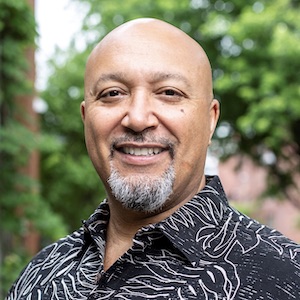
Jason Edward Lewis
Jason Edward Lewis is a digital media theorist, poet, and software designer. He founded Obx Laboratory for Experimental Media, where he conducts research/creation projects exploring computation as a creative and cultural material. Lewis is deeply committed to developing intriguing new forms of expression by working on conceptual, critical, creative and technical levels simultaneously. He is the University Research Chair in Computational Media and the Indigenous Future Imaginary as well Professor of Computation Arts at Concordia University. Lewis was born and raised in northern California, and currently lives in Montreal.