

Five Minutes With Toronto Pod Research Coordinator Orus Mateo Castaño-Suárez
This week, we caught up with Orus about their current research and experiences with Abundant Intelligences.
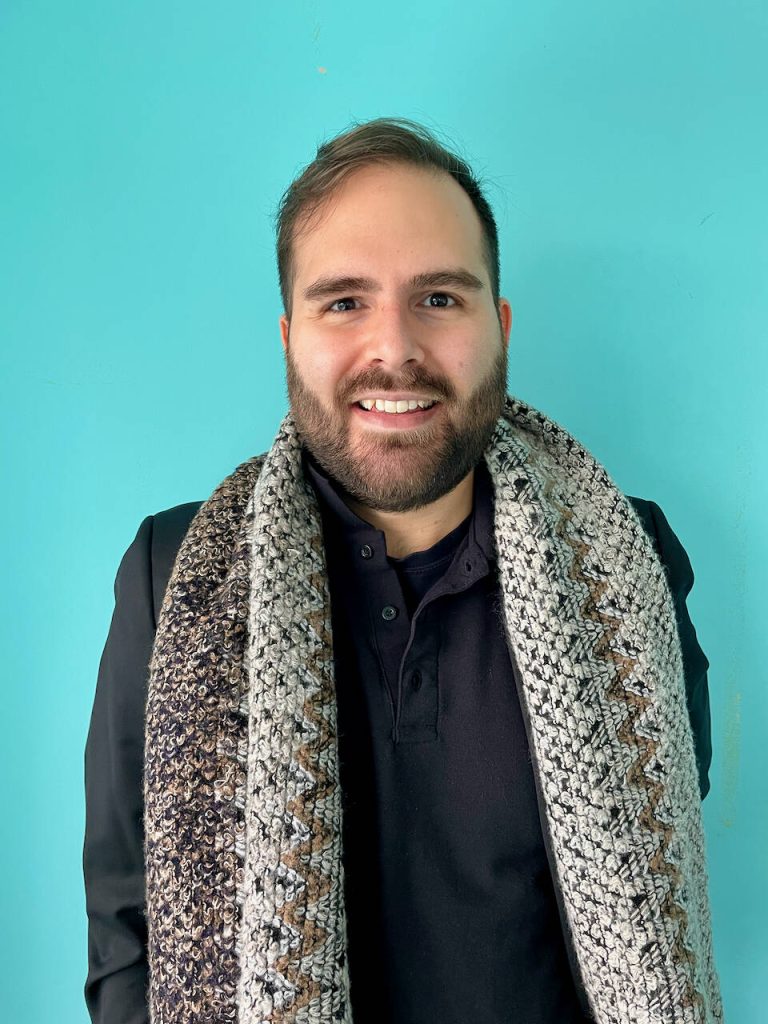
Orus Mateo Castaño-Suárez is an arrivant researcher working at the intersection of visuospatial epistemology, computational topology, Indigenous knowledge systems, and decolonial AI.
In the Abundant Intelligences network, Orus is the Research Coordinator for the Toronto Pod working under Co-PIs Dr. Sara Diamond and Archer Pechawis; Orus is also a Post-master’s Research Fellow for the Wiháŋble S’a Pod working under Co-PIs Dr. Suzanne Kite and Dr. Antoine Bellemare.
Orus is a Research Associate of OCAD University’s Strategic Innovation Lab and Super Ordinary Lab, as well as the Toward Equitable Sustainability Transitions Lab (TEST) at the University of Western Ontario. Orus also contributes to multiple working groups at the Harvard Divinity School Program for the Evolution of Spirituality, including the Indigenous Talking Circle.
This week, we caught up with Orus about their current research and experiences with Abundant Intelligences.
Can you describe your current project — your main work?
My main work is in the visuospatial representation of epistemologies: how our thoughts are interpreted as network graphs and symbols, and how these constructed representations of ideas can be used to interpret and manage complexity. I practice and develop computational and non-computational methods for these systems.
My fascination with symbols and graphs has been lifelong. Their capacity to strike me with their beauty — I think of the Sri Yantra, for instance — while they render complex ideas legible and reveal patterns within otherwise overwhelming systems, continues to drive my work. I am increasingly invested in exploring the relationship between place and the representation of ideas.
My own relationship to place was severed early: I was raised as a refugee on Turtle Island after the Colombian armed conflict displaced my family and shattered our kinship networks. This is part of why extractivism is not theoretical for me.
For example, in the writing systems of India, northern scripts tend toward angular glyphs, while southern scripts favour curvilinear forms. Linguists propose that this distinction is due to the material used to inscribe southern glyphs. The leaves on which scribes wrote would have split under angular strokes, so curvilinear writing emerged as a material necessity.
To me, it seems impossible that these material relationships in our idea-making and idea exploration would not affect us in a deep and personal way — informed, for instance, by Indigenous experience of animism and relationality- “all our relations,” to invoke Leroy Little Bear. Those relations include the materials with which we work. In AI, this means reckoning with extractivism — the cobalt supply chains (shackles?), the political entanglements they imply — with rigour and urgency, while also remaining open to opportunity. My work operates at this challenging intersection of the material politics of computation and the possibility of more relational futures.
You mentioned a longstanding interest in symbols. Is there anything in particular that has inspired you to keep exploring this direction?
Dreaming. Dream practice has been a significant mode of inquiry for me — a way of receiving insight through non-discursive, embodied, and psychological channels. Modelling solutions to complex problems as visuospatial metaphor in dreams and mid-waking states has been a valuable mode of inquiry, especially during my thesis writing.
Among the scholars who have inspired me to keep exploring this direction are two amazing women. First, I’ll mention Dr. Johanna Drucker, whose scholarship on the history of the alphabet, the symbolic representation of complex systems, and Graphic User Interface has been formative. I would also highlight Drucker’s distinction between data and capta, the recognition that information is not simply ‘given’ but actively received, interpreted, and constructed.
Second, I think of Dr. Gemma Anderson-Tempini. Her work draws on Goethe’s polymathic methods, and proposes that similarities of form can bridge disciplines, thereby offering opportunities for art-science collaboration. Her understanding of geomorphology became a critical entry point into the broader transdisciplinary frameworks of my research.
Can you say more about your methodology — how you go about carrying out this interdisciplinary work?
I would take one step back to point out the relational before method and methodology, though. Before methodologies in my work like research-creation, I would point to a disposition to mixed methodology, understood as a commitment to multiple epistemologies held in tension with one another. This is a difficult place to occupy, but it has been rewarding.
I should say that this comfort with epistemic tension is biographical for me. Navigating institutions as a first-generation student, a refugee, and someone who disrupts several categorical binaries at once has meant that holding multiple frameworks in tension is not a methodological choice I arrived at; it is a condition I have always inhabited.
Starting from this point of view, the methods and methodologies remain tools for the relationships, and not the other way around.
I think it’s important to mention this because my practices have murmurated between illusion of an arts-science divide, and the thrill of disrupting that divide is worth sharing in a highly transdisciplinary network like Abundant Intelligences.
In short though, one could characterize my work as the anticipatory design and technological development of digital scholarship methods. In my case that has been mostly anchored in methodological development of Systems Oriented Design (Birger Sevaldson, Svein Gunnar Kjøde) and computational methods of identifying bridge themes across interdisciplinary academic text corpora. In my work these are not unrelated and converge into a set of principles which I detail in my thesis, What may be known: methods for activating large texts and graphs in the climate crisis (2025).
On the computational side, applying Topological Data Analysis methods to topic modelling is producing promising results. As the Abundant Intelligences project moves past its halfway mark, I have even proposed my methods to the Abundant Intelligences network for identifying ‘bridge themes’ across projects that consolidate the interests, efforts, and resources of our research Pods.
Could you speak to how this work interacts with Abundant Intelligences? Do you feel the project has contributed in a meaningful way?
I think Abundant Intelligences is a successful example of critical engagement with AI that centres Indigenous data sovereignty, and this includes innovation. I find the network succeeds in the endeavour of holding broad and complex space for imagining how machine learning and its technological infrastructure can benefit Indigenous communities, while also offering space to ‘stay with the trouble’ of AI, as a nod to Donna Haraway. By providing support and expertise to sit in the tension of ethics and practice, while developing Indigenous AI, my work is given a unique space to grow.
In the Toronto Pod, working with Dr. Sara Diamond, Archer Pechawis, Bonnie Devine, Dr. Suzanne Blight, Peter Morin, Dr. Ruth Green, Dr. Maya Chacaby, Andrew McConnell, Shadrak Gobért, SJ Okemow, and Ostoro Petahtegoose, I have had the opportunity to witness the Dish with One Spoon Wampum Belt Covenant as a framework for Indigenous AI development.
As a post-master’s Research Fellow for the Wiháŋble S’a Pod, I have had the chance to work closely with Dr. Suzanne Kite and Dr. Antoine Bellemare. I have been especially grateful for their mentorship, which is at once scientific, poetic, and cosmological, and for our conversations, which have offered a rare and unexpected kindred.
I want to be precise about my position in this work. I do not claim Indigenous status. I stand as an Arrivant — a refugee guest in the diaspora — working in solidarity with First Nations, Inuit, and Métis sovereignty. My own displacement by colonial violence in Colombia contextualizes my relationship to the sovereignty struggles that Abundant Intelligences centres. This distinction matters to me, and I believe it matters to the integrity of the work.
Before gratitude for intellectual exchange, I hold and treasure the memories of how deep listening is modelled by key members in the community. I think of Leroy Little Bear and Dr. Maya Chacaby in particular, who have offered deep focus, space for discussion, and a quality of generosity that has been quite moving.
To wrap up, how do you hope your research will make a difference in your field, community, or in the wider world?
I hope to build infrastructure for ideas and systems that outlast me in their support of Indigenous communities. I hope my work serves to identify, reveal, and develop methods that foster deeper understanding across difference, and deeper attentiveness to the more-than-human, so we might practice a deeper harmony with the methods that they dictate for us to inherit from them.
Five Minutes With Toronto Pod Research Coordinator Orus Mateo Castaño-Suárez
This week, we caught up with Orus about their current research and experiences with Abundant Intelligences.
Orus Mateo Castaño-Suárez is an arrivant researcher working at the intersection of visuospatial epistemology, computational topology, Indigenous knowledge systems, and decolonial AI.
In the Abundant Intelligences network, Orus is the Research Coordinator for the Toronto Pod working under Co-PIs Dr. Sara Diamond and Archer Pechawis; Orus is also a Post-master’s Research Fellow for the Wiháŋble S’a Pod working under Co-PIs Dr. Suzanne Kite and Dr. Antoine Bellemare.
Orus is a Research Associate of OCAD University’s Strategic Innovation Lab and Super Ordinary Lab, as well as the Toward Equitable Sustainability Transitions Lab (TEST) at the University of Western Ontario. Orus also contributes to multiple working groups at the Harvard Divinity School Program for the Evolution of Spirituality, including the Indigenous Talking Circle.
This week, we caught up with Orus about their current research and experiences with Abundant Intelligences.
Can you describe your current project — your main work?
My main work is in the visuospatial representation of epistemologies: how our thoughts are interpreted as network graphs and symbols, and how these constructed representations of ideas can be used to interpret and manage complexity. I practice and develop computational and non-computational methods for these systems.
My fascination with symbols and graphs has been lifelong. Their capacity to strike me with their beauty — I think of the Sri Yantra, for instance — while they render complex ideas legible and reveal patterns within otherwise overwhelming systems, continues to drive my work. I am increasingly invested in exploring the relationship between place and the representation of ideas.
My own relationship to place was severed early: I was raised as a refugee on Turtle Island after the Colombian armed conflict displaced my family and shattered our kinship networks. This is part of why extractivism is not theoretical for me.
For example, in the writing systems of India, northern scripts tend toward angular glyphs, while southern scripts favour curvilinear forms. Linguists propose that this distinction is due to the material used to inscribe southern glyphs. The leaves on which scribes wrote would have split under angular strokes, so curvilinear writing emerged as a material necessity.
To me, it seems impossible that these material relationships in our idea-making and idea exploration would not affect us in a deep and personal way — informed, for instance, by Indigenous experience of animism and relationality- “all our relations,” to invoke Leroy Little Bear. Those relations include the materials with which we work. In AI, this means reckoning with extractivism — the cobalt supply chains (shackles?), the political entanglements they imply — with rigour and urgency, while also remaining open to opportunity. My work operates at this challenging intersection of the material politics of computation and the possibility of more relational futures.
You mentioned a longstanding interest in symbols. Is there anything in particular that has inspired you to keep exploring this direction?
Dreaming. Dream practice has been a significant mode of inquiry for me — a way of receiving insight through non-discursive, embodied, and psychological channels. Modelling solutions to complex problems as visuospatial metaphor in dreams and mid-waking states has been a valuable mode of inquiry, especially during my thesis writing.
Among the scholars who have inspired me to keep exploring this direction are two amazing women. First, I’ll mention Dr. Johanna Drucker, whose scholarship on the history of the alphabet, the symbolic representation of complex systems, and Graphic User Interface has been formative. I would also highlight Drucker’s distinction between data and capta, the recognition that information is not simply ‘given’ but actively received, interpreted, and constructed.
Second, I think of Dr. Gemma Anderson-Tempini. Her work draws on Goethe’s polymathic methods, and proposes that similarities of form can bridge disciplines, thereby offering opportunities for art-science collaboration. Her understanding of geomorphology became a critical entry point into the broader transdisciplinary frameworks of my research.
Can you say more about your methodology — how you go about carrying out this interdisciplinary work?
I would take one step back to point out the relational before method and methodology, though. Before methodologies in my work like research-creation, I would point to a disposition to mixed methodology, understood as a commitment to multiple epistemologies held in tension with one another. This is a difficult place to occupy, but it has been rewarding.
I should say that this comfort with epistemic tension is biographical for me. Navigating institutions as a first-generation student, a refugee, and someone who disrupts several categorical binaries at once has meant that holding multiple frameworks in tension is not a methodological choice I arrived at; it is a condition I have always inhabited.
Starting from this point of view, the methods and methodologies remain tools for the relationships, and not the other way around.
I think it’s important to mention this because my practices have murmurated between illusion of an arts-science divide, and the thrill of disrupting that divide is worth sharing in a highly transdisciplinary network like Abundant Intelligences.
In short though, one could characterize my work as the anticipatory design and technological development of digital scholarship methods. In my case that has been mostly anchored in methodological development of Systems Oriented Design (Birger Sevaldson, Svein Gunnar Kjøde) and computational methods of identifying bridge themes across interdisciplinary academic text corpora. In my work these are not unrelated and converge into a set of principles which I detail in my thesis, What may be known: methods for activating large texts and graphs in the climate crisis (2025).
On the computational side, applying Topological Data Analysis methods to topic modelling is producing promising results. As the Abundant Intelligences project moves past its halfway mark, I have even proposed my methods to the Abundant Intelligences network for identifying ‘bridge themes’ across projects that consolidate the interests, efforts, and resources of our research Pods.
Could you speak to how this work interacts with Abundant Intelligences? Do you feel the project has contributed in a meaningful way?
I think Abundant Intelligences is a successful example of critical engagement with AI that centres Indigenous data sovereignty, and this includes innovation. I find the network succeeds in the endeavour of holding broad and complex space for imagining how machine learning and its technological infrastructure can benefit Indigenous communities, while also offering space to ‘stay with the trouble’ of AI, as a nod to Donna Haraway. By providing support and expertise to sit in the tension of ethics and practice, while developing Indigenous AI, my work is given a unique space to grow.
In the Toronto Pod, working with Dr. Sara Diamond, Archer Pechawis, Bonnie Devine, Dr. Suzanne Blight, Peter Morin, Dr. Ruth Green, Dr. Maya Chacaby, Andrew McConnell, Shadrak Gobért, SJ Okemow, and Ostoro Petahtegoose, I have had the opportunity to witness the Dish with One Spoon Wampum Belt Covenant as a framework for Indigenous AI development.
As a post-master’s Research Fellow for the Wiháŋble S’a Pod, I have had the chance to work closely with Dr. Suzanne Kite and Dr. Antoine Bellemare. I have been especially grateful for their mentorship, which is at once scientific, poetic, and cosmological, and for our conversations, which have offered a rare and unexpected kindred.
I want to be precise about my position in this work. I do not claim Indigenous status. I stand as an Arrivant — a refugee guest in the diaspora — working in solidarity with First Nations, Inuit, and Métis sovereignty. My own displacement by colonial violence in Colombia contextualizes my relationship to the sovereignty struggles that Abundant Intelligences centres. This distinction matters to me, and I believe it matters to the integrity of the work.
Before gratitude for intellectual exchange, I hold and treasure the memories of how deep listening is modelled by key members in the community. I think of Leroy Little Bear and Dr. Maya Chacaby in particular, who have offered deep focus, space for discussion, and a quality of generosity that has been quite moving.
To wrap up, how do you hope your research will make a difference in your field, community, or in the wider world?
I hope to build infrastructure for ideas and systems that outlast me in their support of Indigenous communities. I hope my work serves to identify, reveal, and develop methods that foster deeper understanding across difference, and deeper attentiveness to the more-than-human, so we might practice a deeper harmony with the methods that they dictate for us to inherit from them.