

Five Minutes with Abundant Intelligences’ Postdoctoral Researcher, Melemaikalani Moniz
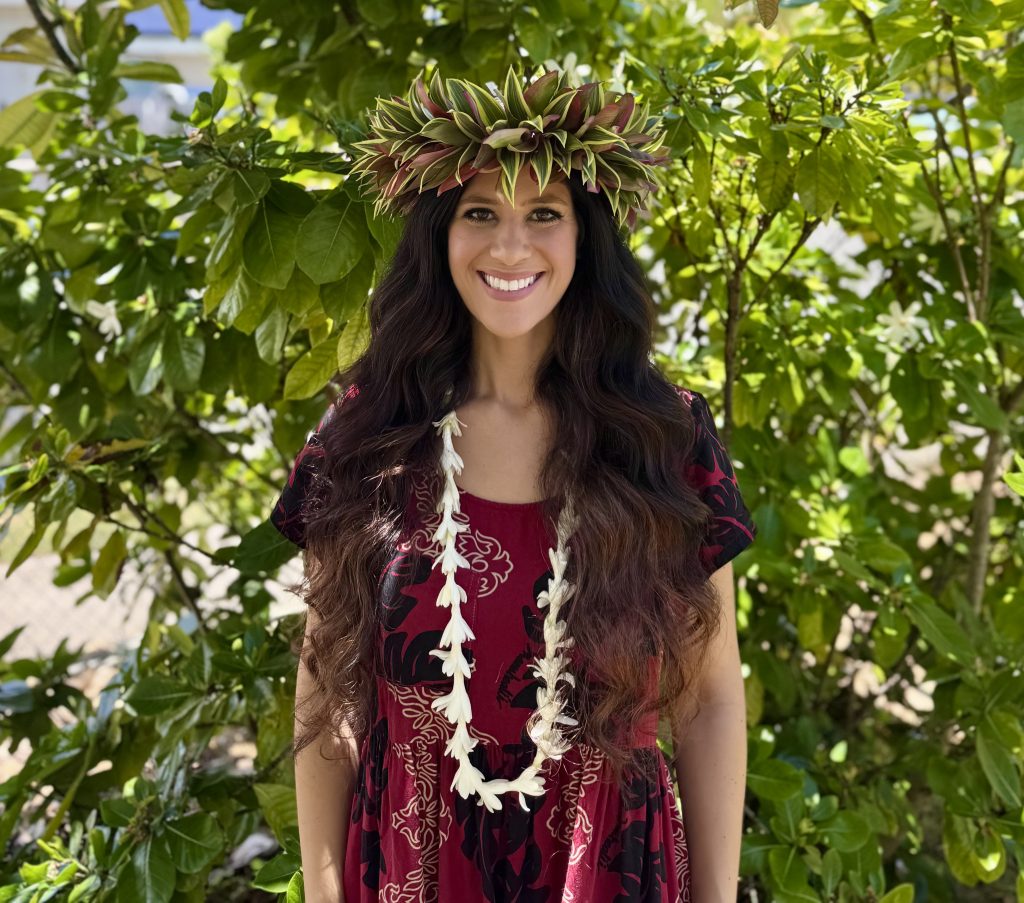
This past week, we caught up with Abundant Intelligences' Postdoctoral Researcher in Indigenous Innovation in Communities & Climate Readiness, Melemaikalani Moniz
1. Can you tell us, in simple terms, what your current research or project is about?
I am a Postdoctoral Researcher in Indigenous Innovation in Communities & Climate Readiness, funded by Ka Hawai‘i Pae ‘Āina Pod of Abundant Intelligences, located at the University of Hawai‘i at Mānoa. As a Postdoctoral Researcher, I am currently leading the Abundant Soils project, which examines the intersection of Kānaka ʻŌiwi (Native Hawaiian) knowledge systems, western soil science, and artificial intelligence to advance environmental justice in Hawaiʻi. Our project seeks to reimagine artificial intelligence through ʻŌiwi worldviews, challenging colonial frameworks and ensuring the ethical integration of community-driven technologies that center ʻŌiwi and promote equity. Our goal is to cultivate factual AI systems grounded in care, abundance, and cultural relevance, honoring all within our spiritual universe.
2. What inspired you to start exploring this topic, and why is it important right now?
O ka pono ke hana ‘ia a iho mai na lani.
Continue to do good until the heavens come down to you.
I have been raised by my ‘ohana or family to believe we each have a kuleana or sacred, reciprocal responsibility to give all that we have for the benefit of our people. In furtherance of my kuleana, my work as an ‘Ōiwi Postdoctoral Researcher with Abundant Intelligences provides me a tremendous opportunity to be at the forefront of issues like the impact of artificial intelligence on our lāhui or nation. Through Abundant Soils, I am gifted the chance to deepen this opportunity by ethically exploring the intersection between ‘Ōiwi knowledge systems, western soil science, and artificial intelligence for the benefit of our ‘āina or land.
As ‘Ōiwi, we know that the health and well-being of our ‘āina directly correlates to the health and well-being of our people. The Kumulipō, an ‘Ōiwi cosmogonic chant of creation, defines this relationship as a genealogical connection. This genealogical connection exists as we are the progeny of Wākea (Sky Father) and Papahānaumoku (Earth Mother). As a result, all ‘Ōiwi are inextricably linked to our ‘āina, as well as all else within our spiritual universe, mentally, physically, emotionally, and spiritually. Accordingly, any opportunity to advance environmental justice in Hawai‘i is an opportunity to advance the health and well-being of our people.
An integral aspect of advancing environmental justice, however, is exercising our agency concerning artificial intelligence to minimize any detrimental effects on our ‘āina as well as on ourselves. The rapid development of artificial intelligence based on “neoliberal white male realities” brings us to a critical juncture in this Western society. As Dr. Yaw Ofosu – Asare notes, cognitive imperialism refers to the “phenomenon of AI systems predominantly developed within Western paradigms that implicitly embed and propagate certain worldviews and epistemologies, often to the exclusion or marginalisation of others.” Amir Baradaran expounds on this issue as he notes, “this phenomenon is shaped by a discourse of technological determinism carried through American capitalism and residuals of the White savior complex.” If not actively combatted, the epistemic dominance of subjugating systems will further marginalize us and our knowledge systems.
Abundant Soils is one of the ways by which I am actively combating these subjugating systems while also pursuing a decolonial pathway forward to liberation. In that way, I hope to fulfill my kuleana of giving what I have for the benefit of my people.
3. What methods or approaches are you using to carry out your research?
Abundant Soils is comprised of seven essential components: 1) actively developing an ‘Ōiwi cultural foundation in community with ‘Ōiwi knowledge holders, 2) actively developing an understanding of the oppression of racialized peoples, centering ‘Ōiwi while on Hawaiian land, 3) ‘Ōiwi data sovereignty and data governance, 4) western soil science, 5) the intersection between ‘Ōiwi & western soil science, 6) community-centered data visualization & AI modeling, and 7) consistent community engagement. Each component is necessary to ethically integrate ‘Ōiwi knowledge, western soil science, and artificial intelligence.
To achieve this, I plan on creating an open-source classroom where each month is dedicated to a particular topic with a minimum of four speakers per month. Starting on February 5th at 10 am HST/3 PM EST, I will give a project-wide talk about Abundant Soils before beginning the open-source classroom in February with the first component: actively developing an ‘Ōiwi cultural foundation in community with ‘Ōiwi knowledge holders. It’s imperative that Abundant Soils is firmly rooted, constructed, and formed from an ‘Ōiwi foundation. Not only to ensure that an ‘Ōiwi project on ‘Ōiwi land is created by and for ‘Ōiwi and is based on ‘Ōiwi epistemology, but also because our epistemology is who we are. As Dr. Manulani Aluli Meyer explains in discussing Hawaiian ways of knowing, while she uses the term “epistemology…as a way of bartering within a wider arena of culture…the discussion is about Hawaiian essence, Hawaiian being, Hawaiian cultural views of intelligence.” It becomes that much more important that everyone in Abundant Soils has a foundation of ‘Ōiwi knowledge, especially when seeking the ethical integration of ‘Ōiwi ways of knowing with colonial constructs.
To adequately perceive ‘Ōiwi knowledge, however, we must also recognize that our capacity for truth is limited by the extent to which we have decolonized as indigenous people or worked on being actively anti-racist as non-indigenous people. While each person’s decolonization journey is unique to themselves, an ethical integration of knowledge systems in this academic context requires a foundation of decolonial theory to help question the ever-present indoctrination that we experience as indigenous people. Even more beneficial, a foundation of decolonial theory helps us understand our oppression to more effectively organize against it, invites new opportunities to expand our conceptions of liberation, and allows us to learn from other racialized peoples. Yet it must be understood that decolonial theory is limited in informing our understanding of our indoctrination, as who we are as ‘Ōiwi already retains all the information we need to exercise ea or sovereignty and to reach liberation.
While I do want to create every opportunity for Abundant Soils participants to learn as much as they can about ‘Ōiwi culture and to provide as much information as I can about decolonial theory, I do not expect anyone who comes into this space to be an expert, nor do I expect them to leave as one. However, to minimize harm and ensure that this project is pono or has the correct or proper procedure, we must be actively learning ‘Ōiwi epistemology while actively decolonizing to shift our mindset to the furthest extent possible into a Hawaiian way of being. Although we will never be fully decolonized in our lifetime, any shifts we make now will create more capacity for the next generations to exercise ea.
As we work on shifting our mindset, this can then assist us in perceiving how to promote equity for our people within colonial constructs. For example, creating a more equitable data governance policy for a soil science lab begins with understanding our cosmology and enough of our epistemology, including our multi-faceted relationship to soil, to then be able to articulate the different levels of harm occurring and the potential for harm that may occur to us both culturally and materially. This then informs the appropriate way in which ‘Ōiwi and non-‘Ōiwi should approach soil and, by extension, the taking, testing, and “disposal” of soil while also correlating the applicable levels of harm to the data sets collected throughout the entire process, which can then be minimized in the policy. Furthermore, as the data continues to be utilized in projects and in AI modeling, the soil from which the data is derived may still be kept. To truly promote equity and minimize harm to ‘Ōiwi, a data governance policy must also culturally account for the storing of the soil, access to the archive, how to handle the archived soil, as well as the soil return process.
I plan to maintain this level of integration as Abundant Soils moves to explore ‘Ōiwi knowledge integration with western soil science and then with artificial intelligence.
4. How has Abundant Intelligences helped with this research or project?
The opportunity that Abundant Intelligences provides not only fosters solidarity with other Indigenous Peoples around the world grappling with similar issues but also forms a meaningful coalition of like-minded individuals who genuinely care about the betterment of all. For example, in the Cultural Techniques Towards Indigenous AI Reading Group, I have enjoyed our readings, the numerous conversations, and the camaraderie formed to answer pressing questions relating to how different cultures and knowledges are woven together in a concrete technology like artificial intelligence. When I’ve been faced with technical questions about artificial intelligence or even when I’ve experienced the prejudices people have about Indigenous Peoples in artificial intelligence, I truly appreciate that I can reach out to them for advice and support.
Additionally, at the 3rd Annual General Meeting for Abundant Intelligences, I was grateful to experience thought-provoking presentations and enriching conversations with individuals leading in their respective fields. For example, the panel I moderated, called Community Grounded Policy and Governance for Indigenous Peoples, introduced me to Dr. Ashley Cordes, Dr. Jackie Rice, Dr. Leroy Little Bear, Dr. Natasha MacDonald, and Dr. Ali Mehdi, who exposed me to the numerous ways in which they are exercising technological sovereignty at a community and national level. And, meaningfully to me as an Oceanic person, I was deeply inspired by the Aotearoa Pod as not only leaders in spaces like data sovereignty, digital sovereignty, community advocacy, and artificial intelligence, but in their heartfelt aloha for their land, culture, language, and people.
The possibility for me to attend the Annual General Meeting and to have these experiences, however, would not have been possible if not for the support of my supervisors, Professor Jason Edward Lewis and Dr. Susan Crow. As a junior researcher, their insight has assisted me as I continue to evolve in my scholarship and presentations, as well as in the construction and evolution of Abundant Soils. This support is underscored by the support I’ve received from headquarters. Sabrina Smith has been incredible in her guidance and feedback, helping me navigate within Abundant Intelligences to get crucial information to help me implement my goals. Lastly, I am grateful to Dr. Kari Noe and Tyra Bailey of Ka Hawai‘i Pae ‘Āina Pod, for all they’ve done to ensure that we each have what we need to be successful. In many ways, it’s the people who comprise Abundant Intelligences who make this an invaluable experience.
5. How do you hope your research will make a difference — in your field, community, or in the wider world?
I ka wā mamua, ka wā mahope
The future is in the past
I hope that my research will assist in further grounding our present in our language, culture, land, and people. As ‘Ōiwi, we know our kūpuna have always been brilliant. The strength of our resilience is a remarkable capacity for invention and innovation that has led to our survival even after over 90% of our population was decimated due to colonization. To move forward, then, for us as ‘Ōiwi is to do so by orienting ourselves in the present to ka wā mamua or the time in front or before to assist us in our pathway forward. Dr. Haunani Kay Trask, citing Dr. Lilikalā Kame‘eleihiwa, explains this as “the Hawaiian stands firmly in the present, with his back to the future, and his eyes fixed upon the past, seeking historical answers for present–day dilemmas. Such an orientation is the Hawaiian an eminently practical one, for the future is always unknown whereas the past is rich in glory and knowledge.” Moreover, as studies show, our language, culture, land, and people are the very medicine we need to heal the ongoing intergenerational trauma that we experience as ‘Ōiwi, allowing us more capacity to exercise ea or sovereignty now and to come.
By:
Sabrina Smith
Date:
January 26, 2026
Location:
Mānoa, Hawai'i
Five Minutes with Abundant Intelligences’ Postdoctoral Researcher, Melemaikalani Moniz
By:
Sabrina Smith
Date:
January 26, 2026
Location:
Mānoa, Hawai'i
This past week, we caught up with Abundant Intelligences' Postdoctoral Researcher in Indigenous Innovation in Communities & Climate Readiness, Melemaikalani Moniz
1. Can you tell us, in simple terms, what your current research or project is about?
I am a Postdoctoral Researcher in Indigenous Innovation in Communities & Climate Readiness, funded by Ka Hawai‘i Pae ‘Āina Pod of Abundant Intelligences, located at the University of Hawai‘i at Mānoa. As a Postdoctoral Researcher, I am currently leading the Abundant Soils project, which examines the intersection of Kānaka ʻŌiwi (Native Hawaiian) knowledge systems, western soil science, and artificial intelligence to advance environmental justice in Hawaiʻi. Our project seeks to reimagine artificial intelligence through ʻŌiwi worldviews, challenging colonial frameworks and ensuring the ethical integration of community-driven technologies that center ʻŌiwi and promote equity. Our goal is to cultivate factual AI systems grounded in care, abundance, and cultural relevance, honoring all within our spiritual universe.
2. What inspired you to start exploring this topic, and why is it important right now?
O ka pono ke hana ‘ia a iho mai na lani.
Continue to do good until the heavens come down to you.
I have been raised by my ‘ohana or family to believe we each have a kuleana or sacred, reciprocal responsibility to give all that we have for the benefit of our people. In furtherance of my kuleana, my work as an ‘Ōiwi Postdoctoral Researcher with Abundant Intelligences provides me a tremendous opportunity to be at the forefront of issues like the impact of artificial intelligence on our lāhui or nation. Through Abundant Soils, I am gifted the chance to deepen this opportunity by ethically exploring the intersection between ‘Ōiwi knowledge systems, western soil science, and artificial intelligence for the benefit of our ‘āina or land.
As ‘Ōiwi, we know that the health and well-being of our ‘āina directly correlates to the health and well-being of our people. The Kumulipō, an ‘Ōiwi cosmogonic chant of creation, defines this relationship as a genealogical connection. This genealogical connection exists as we are the progeny of Wākea (Sky Father) and Papahānaumoku (Earth Mother). As a result, all ‘Ōiwi are inextricably linked to our ‘āina, as well as all else within our spiritual universe, mentally, physically, emotionally, and spiritually. Accordingly, any opportunity to advance environmental justice in Hawai‘i is an opportunity to advance the health and well-being of our people.
An integral aspect of advancing environmental justice, however, is exercising our agency concerning artificial intelligence to minimize any detrimental effects on our ‘āina as well as on ourselves. The rapid development of artificial intelligence based on “neoliberal white male realities” brings us to a critical juncture in this Western society. As Dr. Yaw Ofosu – Asare notes, cognitive imperialism refers to the “phenomenon of AI systems predominantly developed within Western paradigms that implicitly embed and propagate certain worldviews and epistemologies, often to the exclusion or marginalisation of others.” Amir Baradaran expounds on this issue as he notes, “this phenomenon is shaped by a discourse of technological determinism carried through American capitalism and residuals of the White savior complex.” If not actively combatted, the epistemic dominance of subjugating systems will further marginalize us and our knowledge systems.
Abundant Soils is one of the ways by which I am actively combating these subjugating systems while also pursuing a decolonial pathway forward to liberation. In that way, I hope to fulfill my kuleana of giving what I have for the benefit of my people.
3. What methods or approaches are you using to carry out your research?
Abundant Soils is comprised of seven essential components: 1) actively developing an ‘Ōiwi cultural foundation in community with ‘Ōiwi knowledge holders, 2) actively developing an understanding of the oppression of racialized peoples, centering ‘Ōiwi while on Hawaiian land, 3) ‘Ōiwi data sovereignty and data governance, 4) western soil science, 5) the intersection between ‘Ōiwi & western soil science, 6) community-centered data visualization & AI modeling, and 7) consistent community engagement. Each component is necessary to ethically integrate ‘Ōiwi knowledge, western soil science, and artificial intelligence.
To achieve this, I plan on creating an open-source classroom where each month is dedicated to a particular topic with a minimum of four speakers per month. Starting on February 5th at 10 am HST/3 PM EST, I will give a project-wide talk about Abundant Soils before beginning the open-source classroom in February with the first component: actively developing an ‘Ōiwi cultural foundation in community with ‘Ōiwi knowledge holders. It’s imperative that Abundant Soils is firmly rooted, constructed, and formed from an ‘Ōiwi foundation. Not only to ensure that an ‘Ōiwi project on ‘Ōiwi land is created by and for ‘Ōiwi and is based on ‘Ōiwi epistemology, but also because our epistemology is who we are. As Dr. Manulani Aluli Meyer explains in discussing Hawaiian ways of knowing, while she uses the term “epistemology…as a way of bartering within a wider arena of culture…the discussion is about Hawaiian essence, Hawaiian being, Hawaiian cultural views of intelligence.” It becomes that much more important that everyone in Abundant Soils has a foundation of ‘Ōiwi knowledge, especially when seeking the ethical integration of ‘Ōiwi ways of knowing with colonial constructs.
To adequately perceive ‘Ōiwi knowledge, however, we must also recognize that our capacity for truth is limited by the extent to which we have decolonized as indigenous people or worked on being actively anti-racist as non-indigenous people. While each person’s decolonization journey is unique to themselves, an ethical integration of knowledge systems in this academic context requires a foundation of decolonial theory to help question the ever-present indoctrination that we experience as indigenous people. Even more beneficial, a foundation of decolonial theory helps us understand our oppression to more effectively organize against it, invites new opportunities to expand our conceptions of liberation, and allows us to learn from other racialized peoples. Yet it must be understood that decolonial theory is limited in informing our understanding of our indoctrination, as who we are as ‘Ōiwi already retains all the information we need to exercise ea or sovereignty and to reach liberation.
While I do want to create every opportunity for Abundant Soils participants to learn as much as they can about ‘Ōiwi culture and to provide as much information as I can about decolonial theory, I do not expect anyone who comes into this space to be an expert, nor do I expect them to leave as one. However, to minimize harm and ensure that this project is pono or has the correct or proper procedure, we must be actively learning ‘Ōiwi epistemology while actively decolonizing to shift our mindset to the furthest extent possible into a Hawaiian way of being. Although we will never be fully decolonized in our lifetime, any shifts we make now will create more capacity for the next generations to exercise ea.
As we work on shifting our mindset, this can then assist us in perceiving how to promote equity for our people within colonial constructs. For example, creating a more equitable data governance policy for a soil science lab begins with understanding our cosmology and enough of our epistemology, including our multi-faceted relationship to soil, to then be able to articulate the different levels of harm occurring and the potential for harm that may occur to us both culturally and materially. This then informs the appropriate way in which ‘Ōiwi and non-‘Ōiwi should approach soil and, by extension, the taking, testing, and “disposal” of soil while also correlating the applicable levels of harm to the data sets collected throughout the entire process, which can then be minimized in the policy. Furthermore, as the data continues to be utilized in projects and in AI modeling, the soil from which the data is derived may still be kept. To truly promote equity and minimize harm to ‘Ōiwi, a data governance policy must also culturally account for the storing of the soil, access to the archive, how to handle the archived soil, as well as the soil return process.
I plan to maintain this level of integration as Abundant Soils moves to explore ‘Ōiwi knowledge integration with western soil science and then with artificial intelligence.
4. How has Abundant Intelligences helped with this research or project?
The opportunity that Abundant Intelligences provides not only fosters solidarity with other Indigenous Peoples around the world grappling with similar issues but also forms a meaningful coalition of like-minded individuals who genuinely care about the betterment of all. For example, in the Cultural Techniques Towards Indigenous AI Reading Group, I have enjoyed our readings, the numerous conversations, and the camaraderie formed to answer pressing questions relating to how different cultures and knowledges are woven together in a concrete technology like artificial intelligence. When I’ve been faced with technical questions about artificial intelligence or even when I’ve experienced the prejudices people have about Indigenous Peoples in artificial intelligence, I truly appreciate that I can reach out to them for advice and support.
Additionally, at the 3rd Annual General Meeting for Abundant Intelligences, I was grateful to experience thought-provoking presentations and enriching conversations with individuals leading in their respective fields. For example, the panel I moderated, called Community Grounded Policy and Governance for Indigenous Peoples, introduced me to Dr. Ashley Cordes, Dr. Jackie Rice, Dr. Leroy Little Bear, Dr. Natasha MacDonald, and Dr. Ali Mehdi, who exposed me to the numerous ways in which they are exercising technological sovereignty at a community and national level. And, meaningfully to me as an Oceanic person, I was deeply inspired by the Aotearoa Pod as not only leaders in spaces like data sovereignty, digital sovereignty, community advocacy, and artificial intelligence, but in their heartfelt aloha for their land, culture, language, and people.
The possibility for me to attend the Annual General Meeting and to have these experiences, however, would not have been possible if not for the support of my supervisors, Professor Jason Edward Lewis and Dr. Susan Crow. As a junior researcher, their insight has assisted me as I continue to evolve in my scholarship and presentations, as well as in the construction and evolution of Abundant Soils. This support is underscored by the support I’ve received from headquarters. Sabrina Smith has been incredible in her guidance and feedback, helping me navigate within Abundant Intelligences to get crucial information to help me implement my goals. Lastly, I am grateful to Dr. Kari Noe and Tyra Bailey of Ka Hawai‘i Pae ‘Āina Pod, for all they’ve done to ensure that we each have what we need to be successful. In many ways, it’s the people who comprise Abundant Intelligences who make this an invaluable experience.
5. How do you hope your research will make a difference — in your field, community, or in the wider world?
I ka wā mamua, ka wā mahope
The future is in the past
I hope that my research will assist in further grounding our present in our language, culture, land, and people. As ‘Ōiwi, we know our kūpuna have always been brilliant. The strength of our resilience is a remarkable capacity for invention and innovation that has led to our survival even after over 90% of our population was decimated due to colonization. To move forward, then, for us as ‘Ōiwi is to do so by orienting ourselves in the present to ka wā mamua or the time in front or before to assist us in our pathway forward. Dr. Haunani Kay Trask, citing Dr. Lilikalā Kame‘eleihiwa, explains this as “the Hawaiian stands firmly in the present, with his back to the future, and his eyes fixed upon the past, seeking historical answers for present–day dilemmas. Such an orientation is the Hawaiian an eminently practical one, for the future is always unknown whereas the past is rich in glory and knowledge.” Moreover, as studies show, our language, culture, land, and people are the very medicine we need to heal the ongoing intergenerational trauma that we experience as ‘Ōiwi, allowing us more capacity to exercise ea or sovereignty now and to come.