

Five Minutes With Ka’ulawena Alipio: Combatting Pollution Using Bioremediation
Developing phytoremediation gardens to accelerate plants’ ability to break down toxic pollutants or sequester them in their tissues.
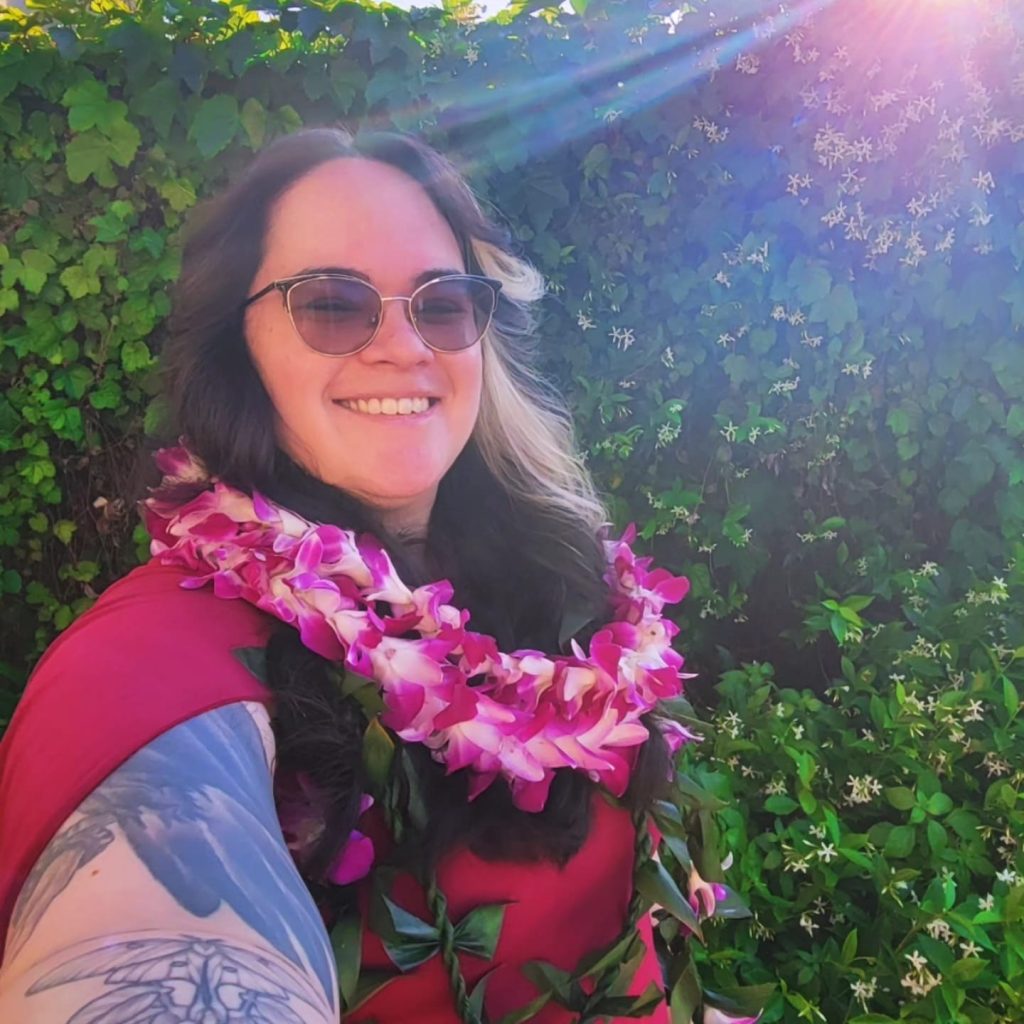
Ka’ulawena Alipio is a Kānaka Maoli PhD candidate in the Department of Biological Anthropology at the University of California San Diego. Born in Pearl City, Hawai’i, Ka’ulawena grew up on the banks of Pearl Harbor before relocating to Texas and finally ending up in San Diego to begin her PhD.
Here, she sheds some light on her current work to combat pollution using bioremediation, how her firsthand experience with pollution in Pearl Harbor inspired her to pursue this career, and how her research incorporates Indigenous data sovereignty to work towards a cleaner, brighter future.
Could you give us a broad overview of your field and what you’re currently working on?
Yeah, absolutely. I am in the Department of Biological Anthropology, but my research focuses more on, like, climate change, pollution, and specifically bioremediation strategies. So that would be the use of biological organisms to remediate that pollution in the environment. I approach this work by using sediment cores – cores that are usually a few meters deep, taken from the earth.
I kind of compare it to taking a biopsy when you’re at the doctor – if you have, like, a skin issue and you need to take a biopsy. I look at it as a way of looking at what’s going on with the Earth at a cellular level, similar to how a biopsy would do that for our health.
And so I take sediment cores from extremely toxic environments, and I look at the pollutants that are present in those cores, and also the environmental DNA that we can gather from the sediment cores. And with that, we can kind of ask questions about what sorts of microbes are living in these toxic environments? How are they adapting to the changes in pollution over time, and are there adaptations in these microbes that might be helpful for developing bioremediation strategies?
My ultimate goal with this research is to develop something called phytoremediation gardens, which would be gardens that have a beneficial mix of local microbes and native plants, and where the microbes can accelerate the plants’ ability to break down toxic pollutants or sequester them in their tissues. So ultimately, that’s what all of this research would eventually lead to, is phytoremediation gardens.
So you’re taking these samples from very toxic environments – what are some examples of places that you’re taking samples from?
I have three case studies that I’m currently working with. One is already collected, it’s from an area called Cataño in Puerto Rico. It is a highly industrialized environment, a lot of water pollution, air pollution, that kind of stuff, so we’re currently looking at those sediment cores. I’m also currently working with people who are gathering cores around Pearl Harbor.
I grew up right near Pearl Harbor in an area called Waiawa, where there is a lot of industrial pollution, so I would really like to get sediment cores specifically from the Waiawa stream that connects to Pearl Harbor. That’s kind of the next step that we’re working on. And then we are also working with cores from the east side of Pearl Harbor, where there’s the war memorial and more of the military toxic pollution going on.
And then also from here in San Diego – the Tijuana River, which is one of the most notoriously polluted environments around here. It’s a very interesting example of when water pollution becomes air pollution, because the water is so toxic, it’s now giving off gases that are causing a lot of health issues for communities living in the area.
What inspired you to start doing this kind of work?
Growing up right around Pearl Harbor in Hawai’i, I just always kind of lived around pollution and toxic environments, and it was very normalized, I think, when I was younger. You know, we were always told, like, you can go play by Waiawa Stream, but you can’t touch the fish. You can’t eat anything you catch from there. Do not touch the water directly, that kind of stuff, you know? So I just grew up being exposed to that in a very different way.
And I am also very personally invested in this work, because I am chronically ill and newly disabled. And so, I feel like I have this dual experience of embodied living around pollution, and also how our health is affected by these environments. And then also, Hawai’i just continues to face such major climate disasters and pollution disasters specifically – areas like Red Hill, where the jet fuel was leaking into the aquifer, and then the recent Kona Low storms, which have stirred up a lot of pesticides and contaminants.
So I really feel that this work is deeply personal, and really is my kuleana, or privilege and responsibility to find remediation solutions, because I have that dual embodied experience and the privilege to do this work.
Could you expand a bit on your methodology and research process?
Yeah! The three main pillars of my project are built around landscape analysis, so that we can ask questions about how the environment has changed over time, over deep geological timescales, and how pollution shows up in that profile.
And then also, the main core of the pollution studies. So, comparing pollutants – asking, are there the same pollutants in Puerto Rico as in San Diego, as in Hawai’i? Are there different ones? How does that change? How do those environments respond differently?
The final part is the environmental DNA that’s present. Right now, we’re just planning to look at the environmental DNA present in the Hawai’i cores, for logistics and time purposes. But ultimately, when I think about the phytoremediation gardens, I want to ask: this particular area needs to be remediated… can we look at the environmental DNA, and then find out how we might be able to build a specific plan for that area that works with the local flora and fauna?
And so, at this stage, I’m really just working with the sediment cores, and I’m looking at heavy metal pollutants using something called XRF. which is sort of like an X-ray machine specifically for elemental ratios. And then I’ll also be using some biogeochemical analysis, which is how we would look for other types of pollutants, like hydrocarbons and PFAS or forever chemicals.
And then for the environmental DNA analysis, we use something called shotgun metagenomic analysis, which is just basically taking a wide picture of all of the fragments of environmental DNA present. That allows us to get an idea of what types of microbes are present and which ones we might want to focus on for deeper analysis.
For those next steps you mentioned, is there any particular way you envision interfacing with Abundant Intelligences to help further this project or your other work?
Yeah, absolutely. Abundant Intelligences has really been fundamental in allowing me to ask these kinds of foundational questions about the microbes that are present, how they’re responding to pollutants, and what are the pollutants in these environments. And then from there, I think we can contribute the phytoremediation gardens to something that can be implemented into, like, larger biocircular buildings.
An example of that is my advisor, Keolu Fox, who is in the Hawai’i pod. His lab focuses on building out decentralized data centers and works with Indigenous communities to help them build out their own self-controlled data centers in order to retain sovereignty over their data, so that you don’t have to go and store it in Amazon’s cloud or something like that. You can keep it on your land, keep control over it, and have final say in who gets to work with it, look at it, use it, everything.
And so, when we started doing this work with building out decentralized data centers, I really became obsessed with the pollution aspect of the big-name AI data centers and the amount of pollution that they kick out. I became really interested in the different modular components of making a decentralized data center… how do we make them less of a polluting, toxic kind of building, right?
There’s been work to make more energy efficient solar-powered data centers, and my aspect of the project is to say, okay, well, let’s tackle this pollution question. And this project has allowed me to start to build out those fundamental questions. Ultimately, I see my work integrating into the bigger questions of, how do we indigenize AI and make it our own and approach it without just doing things the way big-name AI companies tell us to, right?
Of course, there’s also the aspect that, because I am chronically ill and disabled, I’ve had to really shift the way that I approach research. For example, I can’t go to in-person conferences and events, so being a part of Abundant Intelligences’ global network and being able to connect with people virtually has really been a game changer and opened up doors that I otherwise would not have access to.
I really want to highlight that I love the Zoom conferences, the current Abundant Soils seminar talks, the Slack channel, and these researcher profiles… all of these things allow me to have access to resources that I otherwise wouldn’t have access to because of my limitations. So it’s really made a huge difference for me as a chronically ill researcher.
We’re happy that the network is able to support you in that way! We’ve been interested in questions of data sovereignty and environment from the beginning of the program, but we’ve really been seeing a lot of discussion around it recently. I think the network will find your work really fascinating.
Is there somewhere people can learn more about your work, in detail?
Thank you! We did publish a paper in the beginning of 2025 outlining the need for these decentralized data centers, and how we can use circular systems and even futuristic ideas like solarpunk to come up with ideas that allow us to have a future that is not so dystopian. I think it is so easy when we’re dealing with these types of questions to get really down and doomscroll and just feel like it’s all negative, but we really have the technological solutions to make our future better. It’s just a matter of all coming together and implementing them.
Before we wrap things up, is there anything you’d like to add regarding your hopes for how your research will impact your field, community, or the wider world?
Yeah, definitely. Pollution solutions, we need that. But more generally… I hope this research outlives me. I hope it’s the beginning of something more for our communities to develop these sort of solutions, like, developed by our communities and for our communities kind of thing. And I really hope that my research helps people shift the way that they think about pollution in their environment, and how there are all these different organisms that are already existing and figuring out how to remediate the land. You know, things like microbes, fungi, plants, even your own home gardens – we can do bioremediation in very small steps as well. It’s sort of like recycling, right?
And yeah – I just really hope that this research contributes to the development of sustainable, culturally relevant remediation solutions for communities around the world.
You can read Indigenous Data Sovereignty, Circular Systems, and Solarpunk Solutions for a Sustainable Future by Ka’ulawena Alipio, Javier García-Colón, Nima Boscarino, and Keolu Fox here:
https://www.worldscientific.com/doi/10.1142/9789819807024_0054
Citation:
Alipio, K., García-Colón, J., Boscarino, N., & Fox, K. (2025). Indigenous Data Sovereignty, Circular Systems, and Solarpunk Solutions for a Sustainable Future. Pacific Symposium on Biocomputing. Pacific Symposium on Biocomputing, 30, 717–733. https://doi.org/10.1142/9789819807024_0054
Five Minutes With Ka’ulawena Alipio: Combatting Pollution Using Bioremediation
Developing phytoremediation gardens to accelerate plants’ ability to break down toxic pollutants or sequester them in their tissues.
Ka’ulawena Alipio is a Kānaka Maoli PhD candidate in the Department of Biological Anthropology at the University of California San Diego. Born in Pearl City, Hawai’i, Ka’ulawena grew up on the banks of Pearl Harbor before relocating to Texas and finally ending up in San Diego to begin her PhD.
Here, she sheds some light on her current work to combat pollution using bioremediation, how her firsthand experience with pollution in Pearl Harbor inspired her to pursue this career, and how her research incorporates Indigenous data sovereignty to work towards a cleaner, brighter future.
Could you give us a broad overview of your field and what you’re currently working on?
Yeah, absolutely. I am in the Department of Biological Anthropology, but my research focuses more on, like, climate change, pollution, and specifically bioremediation strategies. So that would be the use of biological organisms to remediate that pollution in the environment. I approach this work by using sediment cores – cores that are usually a few meters deep, taken from the earth.
I kind of compare it to taking a biopsy when you’re at the doctor – if you have, like, a skin issue and you need to take a biopsy. I look at it as a way of looking at what’s going on with the Earth at a cellular level, similar to how a biopsy would do that for our health.
And so I take sediment cores from extremely toxic environments, and I look at the pollutants that are present in those cores, and also the environmental DNA that we can gather from the sediment cores. And with that, we can kind of ask questions about what sorts of microbes are living in these toxic environments? How are they adapting to the changes in pollution over time, and are there adaptations in these microbes that might be helpful for developing bioremediation strategies?
My ultimate goal with this research is to develop something called phytoremediation gardens, which would be gardens that have a beneficial mix of local microbes and native plants, and where the microbes can accelerate the plants’ ability to break down toxic pollutants or sequester them in their tissues. So ultimately, that’s what all of this research would eventually lead to, is phytoremediation gardens.
So you’re taking these samples from very toxic environments – what are some examples of places that you’re taking samples from?
I have three case studies that I’m currently working with. One is already collected, it’s from an area called Cataño in Puerto Rico. It is a highly industrialized environment, a lot of water pollution, air pollution, that kind of stuff, so we’re currently looking at those sediment cores. I’m also currently working with people who are gathering cores around Pearl Harbor.
I grew up right near Pearl Harbor in an area called Waiawa, where there is a lot of industrial pollution, so I would really like to get sediment cores specifically from the Waiawa stream that connects to Pearl Harbor. That’s kind of the next step that we’re working on. And then we are also working with cores from the east side of Pearl Harbor, where there’s the war memorial and more of the military toxic pollution going on.
And then also from here in San Diego – the Tijuana River, which is one of the most notoriously polluted environments around here. It’s a very interesting example of when water pollution becomes air pollution, because the water is so toxic, it’s now giving off gases that are causing a lot of health issues for communities living in the area.
What inspired you to start doing this kind of work?
Growing up right around Pearl Harbor in Hawai’i, I just always kind of lived around pollution and toxic environments, and it was very normalized, I think, when I was younger. You know, we were always told, like, you can go play by Waiawa Stream, but you can’t touch the fish. You can’t eat anything you catch from there. Do not touch the water directly, that kind of stuff, you know? So I just grew up being exposed to that in a very different way.
And I am also very personally invested in this work, because I am chronically ill and newly disabled. And so, I feel like I have this dual experience of embodied living around pollution, and also how our health is affected by these environments. And then also, Hawai’i just continues to face such major climate disasters and pollution disasters specifically – areas like Red Hill, where the jet fuel was leaking into the aquifer, and then the recent Kona Low storms, which have stirred up a lot of pesticides and contaminants.
So I really feel that this work is deeply personal, and really is my kuleana, or privilege and responsibility to find remediation solutions, because I have that dual embodied experience and the privilege to do this work.
Could you expand a bit on your methodology and research process?
Yeah! The three main pillars of my project are built around landscape analysis, so that we can ask questions about how the environment has changed over time, over deep geological timescales, and how pollution shows up in that profile.
And then also, the main core of the pollution studies. So, comparing pollutants – asking, are there the same pollutants in Puerto Rico as in San Diego, as in Hawai’i? Are there different ones? How does that change? How do those environments respond differently?
The final part is the environmental DNA that’s present. Right now, we’re just planning to look at the environmental DNA present in the Hawai’i cores, for logistics and time purposes. But ultimately, when I think about the phytoremediation gardens, I want to ask: this particular area needs to be remediated… can we look at the environmental DNA, and then find out how we might be able to build a specific plan for that area that works with the local flora and fauna?
And so, at this stage, I’m really just working with the sediment cores, and I’m looking at heavy metal pollutants using something called XRF. which is sort of like an X-ray machine specifically for elemental ratios. And then I’ll also be using some biogeochemical analysis, which is how we would look for other types of pollutants, like hydrocarbons and PFAS or forever chemicals.
And then for the environmental DNA analysis, we use something called shotgun metagenomic analysis, which is just basically taking a wide picture of all of the fragments of environmental DNA present. That allows us to get an idea of what types of microbes are present and which ones we might want to focus on for deeper analysis.
For those next steps you mentioned, is there any particular way you envision interfacing with Abundant Intelligences to help further this project or your other work?
Yeah, absolutely. Abundant Intelligences has really been fundamental in allowing me to ask these kinds of foundational questions about the microbes that are present, how they’re responding to pollutants, and what are the pollutants in these environments. And then from there, I think we can contribute the phytoremediation gardens to something that can be implemented into, like, larger biocircular buildings.
An example of that is my advisor, Keolu Fox, who is in the Hawai’i pod. His lab focuses on building out decentralized data centers and works with Indigenous communities to help them build out their own self-controlled data centers in order to retain sovereignty over their data, so that you don’t have to go and store it in Amazon’s cloud or something like that. You can keep it on your land, keep control over it, and have final say in who gets to work with it, look at it, use it, everything.
And so, when we started doing this work with building out decentralized data centers, I really became obsessed with the pollution aspect of the big-name AI data centers and the amount of pollution that they kick out. I became really interested in the different modular components of making a decentralized data center… how do we make them less of a polluting, toxic kind of building, right?
There’s been work to make more energy efficient solar-powered data centers, and my aspect of the project is to say, okay, well, let’s tackle this pollution question. And this project has allowed me to start to build out those fundamental questions. Ultimately, I see my work integrating into the bigger questions of, how do we indigenize AI and make it our own and approach it without just doing things the way big-name AI companies tell us to, right?
Of course, there’s also the aspect that, because I am chronically ill and disabled, I’ve had to really shift the way that I approach research. For example, I can’t go to in-person conferences and events, so being a part of Abundant Intelligences’ global network and being able to connect with people virtually has really been a game changer and opened up doors that I otherwise would not have access to.
I really want to highlight that I love the Zoom conferences, the current Abundant Soils seminar talks, the Slack channel, and these researcher profiles… all of these things allow me to have access to resources that I otherwise wouldn’t have access to because of my limitations. So it’s really made a huge difference for me as a chronically ill researcher.
We’re happy that the network is able to support you in that way! We’ve been interested in questions of data sovereignty and environment from the beginning of the program, but we’ve really been seeing a lot of discussion around it recently. I think the network will find your work really fascinating.
Is there somewhere people can learn more about your work, in detail?
Thank you! We did publish a paper in the beginning of 2025 outlining the need for these decentralized data centers, and how we can use circular systems and even futuristic ideas like solarpunk to come up with ideas that allow us to have a future that is not so dystopian. I think it is so easy when we’re dealing with these types of questions to get really down and doomscroll and just feel like it’s all negative, but we really have the technological solutions to make our future better. It’s just a matter of all coming together and implementing them.
Before we wrap things up, is there anything you’d like to add regarding your hopes for how your research will impact your field, community, or the wider world?
Yeah, definitely. Pollution solutions, we need that. But more generally… I hope this research outlives me. I hope it’s the beginning of something more for our communities to develop these sort of solutions, like, developed by our communities and for our communities kind of thing. And I really hope that my research helps people shift the way that they think about pollution in their environment, and how there are all these different organisms that are already existing and figuring out how to remediate the land. You know, things like microbes, fungi, plants, even your own home gardens – we can do bioremediation in very small steps as well. It’s sort of like recycling, right?
And yeah – I just really hope that this research contributes to the development of sustainable, culturally relevant remediation solutions for communities around the world.
You can read Indigenous Data Sovereignty, Circular Systems, and Solarpunk Solutions for a Sustainable Future by Ka’ulawena Alipio, Javier García-Colón, Nima Boscarino, and Keolu Fox here:
https://www.worldscientific.com/doi/10.1142/9789819807024_0054
Citation:
Alipio, K., García-Colón, J., Boscarino, N., & Fox, K. (2025). Indigenous Data Sovereignty, Circular Systems, and Solarpunk Solutions for a Sustainable Future. Pacific Symposium on Biocomputing. Pacific Symposium on Biocomputing, 30, 717–733. https://doi.org/10.1142/9789819807024_0054