Five Minutes With Mathias Becerra Sanchez: Quechua Language Revitalization
Explaining, adapting, and redefining scientific concepts in culturally and linguistically meaningful ways for Quechua communities.
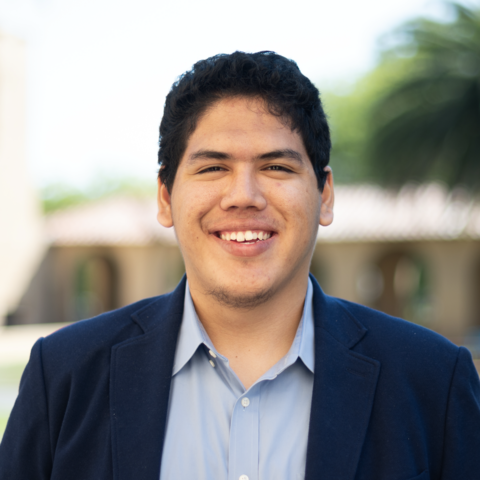
Mathias Becerra Sanchez is a student from Peru currently pursuing a major in Symbolic Systems in the Concentration of Human-Centered AI and Human-Computer Interaction at Stanford University. His work focuses on using technology to empower Indigenous and other digitally disadvantaged languages both in Peru and Latin America. Here, he shares some insight into his Quechua language revitalization work using data-driven technologies, as well as his plans for the future of his research and collaboration with Abundant Intelligences.
Could you start by sharing a bit about your most recent project?
Absolutely. Last summer I obtained an internship to work for the UNICODE Consortium (based in SF) and the Silicon Initiative at Stanford, an opportunity that allowed me to return to Peru, after 2 years since my arrival in the US to conduct fieldwork in multiple Quechua communities around the country. I interviewed around four or five regions and asked them about their linguistic needs and understood how I could serve to help to empower their different dialects. That could be through educational resources, having more visibility in digital spaces, or in general, having the support of myself the researcher, to empower their voices online.
As a first step, I began collecting data to understand community needs and to systematically compare terminology across Quechua dialects, with the goal of building a database that documents and helps preserve linguistic variation..For example, prior to coming to my university, I had the opportunity to design a STEM curriculum centered on discussing the terminology of the periodic table’s elements. This work emerged from recognizing that certain scientific terms did not exist in the Quechua language, which required us (myself and other colleagues from different NGOs) to collaboratively explore how scientific concepts could be explained, adapted, or newly defined in culturally and linguistically meaningful ways through constant exchange of ideas with speakers of different Quechua dialects. The goal was to revitalize these terms, recollect them, and visualize them in educational materials to provide more linguistically appropriate resources in rural areas so that people who do not speak (let’s say) Spanish around Peru can understand or have access to these specific resources. This process is crucial because it establishes the foundation for developing websites and applications that improve access to healthcare, education, and the community’s representation and rights within political spaces.
Is there anything in particular that inspired you to go down that path, or events that happened along the way that are significant in your academic career?
After graduating from high school, I became involved with several organizations that inspired me to pursue language technology. Even before coming to Stanford, I was deeply interested in linguistics, shaped by learning multiple languages and engaging with diverse cultures and traditions, both through people I met online and through my travels across Peru.
However I think something that really caught my mind was understanding more about my own culture, the story of my family, and my own identity. Interacting with people, getting involved with these communities to learn more about the different languages of my country, and working towards creating a significant difference for the future of indigenous communities is what drives me every day.
My family speaks Quechua, but growing up I never fully understood its history or why it was taught to me. I knew it was part of my ancestry, yet I felt drawn to learn more, especially how the tools I now study at Stanford could help me support my community and understand the relationship between language, technology, and community-driven change.
Is there anything else that you would want to add regarding the methodology side of this project, or just how you generally carry out your research?
I feel that what I do is always community-driven. I always conduct fieldwork with the feedback of Quechua speakers, always consulting with Quechua communities about what they need. Having this feedback or input regarding what can actually be carried out to support low-resource languages in Peru is something that should be done for any research; I believe that continuous feedback and support from Indigenous communities are essential before developing technical or research-based projects like those I have worked on in recent years.
In simple words: human-centered, but speaking more about the frameworks: data collection through spreadsheets, note-taking on-site (during the interviews), and even recording our conversations or taking pictures (with the permission of the speakers). From one standpoint, it may seem very informal at first, but it is what has to be done.
I literally have a paper where I collect all these different terminologies, and I put them in spreadsheets in Excel so that I can draw differences and similarities between different Quechua dialects.
On the more technical side, my work also includes experimenting with creating websites and apps using Visual Studio Code, coding in JavaScript and HTML, and using frameworks like React Native and newer AI-driven tools to create different forms of gamified educational materials for local communities. However, at its core, the work is always guided by what the community actually needs to visualize their languages
I’m glad that you’ve connected with Abundant Intelligences – a lot of our network is very focused on methodology and epistemology, community-focused research practices… This work fits in so well!
Speaking of that, is there any particular way that you envision your work interacting with Abundant Intelligences, or is there anything you’re looking for in terms of support from our network?
When I was introduced to Abundant Intelligences, I saw it as the perfect opportunity to be able to develop myself more as a future language technologist, but one that is focused more on language accessibility, access, and revitalization, using technology as a tool for social good. I always wanted to have this opportunity to work on Indigenous languages, but on the more technological side of things.
I saw AbInt as the perfect research institute to be able to continue the research I’ve been doing for the past 5 years. I see it as an opportunity to connect with mentors, with people who have already conducted this research as part of their professional careers, but at the same time, an opportunity to understand differences and similarities between my community’s language, Quechua, and other languages spoken around Latin America and the US, or even around the globe. I feel this is a global community, which allows me to have different perspectives on understanding the different revitalization work that has been carried out with different communities in Canada, and that could very well be applied to communities in Peru.
How do you hope your research might make a difference in your field, in your community, or globally?
I have always envisioned working for an organization like UNESCO or the UN itself. I always wanted to help more communities globally, and I think that working on Indigenous languages, technology, psychology, and social-driven fields… has allowed me to see that I can have a bigger impact in the world. Not only because that’s how I would like to see myself in the future, but amazed by how much potential there is to create meaningful change.
Two months ago, I was accepted into UNESCO’s International Decade of Indigenous Languages (2022–2032) ad hoc groups on Indigenous resilience. This experience has been incredibly meaningful, allowing me to engage with Indigenous leaders and professionals working directly on language revitalization.
Being part of this space has the potential to open new pathways for collaboration, increase visibility for Indigenous languages across Peru, and support the creation of educational resources, both for low-resource Indigenous communities themselves and for broader audiences who may be unfamiliar with the linguistic diversity of Peru.
Becoming involved in the work of supporting Indigenous languages, amplifying their visibility, advocating for language rights, informing policy, and creating inclusive educational spaces feels deeply impactful to me. I see this work as having global significance because meaningful participation should be open to people from all backgrounds. One does not need to speak an Indigenous language to make a difference; what matters is the commitment, initiative, and willingness to stand in solidarity with language communities!
This is the direction I want to continue pursuing, and I believe I am already on that path. Moving forward, I hope to deepen my engagement across diverse communities and my technical expertise, and collaborate with organizations that can help sustain and expand this work… just like Abundant Intelligences!
By:
Hazel Dreslinski
Date:
February 19, 2026
Location:
Stanford University, California
Five Minutes With Mathias Becerra Sanchez: Quechua Language Revitalization
By:
Hazel Dreslinski
Date:
February 19, 2026
Location:
Stanford University, California
Explaining, adapting, and redefining scientific concepts in culturally and linguistically meaningful ways for Quechua communities.
Mathias Becerra Sanchez is a student from Peru currently pursuing a major in Symbolic Systems in the Concentration of Human-Centered AI and Human-Computer Interaction at Stanford University. His work focuses on using technology to empower Indigenous and other digitally disadvantaged languages both in Peru and Latin America. Here, he shares some insight into his Quechua language revitalization work using data-driven technologies, as well as his plans for the future of his research and collaboration with Abundant Intelligences.
Could you start by sharing a bit about your most recent project?
Absolutely. Last summer I obtained an internship to work for the UNICODE Consortium (based in SF) and the Silicon Initiative at Stanford, an opportunity that allowed me to return to Peru, after 2 years since my arrival in the US to conduct fieldwork in multiple Quechua communities around the country. I interviewed around four or five regions and asked them about their linguistic needs and understood how I could serve to help to empower their different dialects. That could be through educational resources, having more visibility in digital spaces, or in general, having the support of myself the researcher, to empower their voices online.
As a first step, I began collecting data to understand community needs and to systematically compare terminology across Quechua dialects, with the goal of building a database that documents and helps preserve linguistic variation..For example, prior to coming to my university, I had the opportunity to design a STEM curriculum centered on discussing the terminology of the periodic table’s elements. This work emerged from recognizing that certain scientific terms did not exist in the Quechua language, which required us (myself and other colleagues from different NGOs) to collaboratively explore how scientific concepts could be explained, adapted, or newly defined in culturally and linguistically meaningful ways through constant exchange of ideas with speakers of different Quechua dialects. The goal was to revitalize these terms, recollect them, and visualize them in educational materials to provide more linguistically appropriate resources in rural areas so that people who do not speak (let’s say) Spanish around Peru can understand or have access to these specific resources. This process is crucial because it establishes the foundation for developing websites and applications that improve access to healthcare, education, and the community’s representation and rights within political spaces.
Is there anything in particular that inspired you to go down that path, or events that happened along the way that are significant in your academic career?
After graduating from high school, I became involved with several organizations that inspired me to pursue language technology. Even before coming to Stanford, I was deeply interested in linguistics, shaped by learning multiple languages and engaging with diverse cultures and traditions, both through people I met online and through my travels across Peru.
However I think something that really caught my mind was understanding more about my own culture, the story of my family, and my own identity. Interacting with people, getting involved with these communities to learn more about the different languages of my country, and working towards creating a significant difference for the future of indigenous communities is what drives me every day.
My family speaks Quechua, but growing up I never fully understood its history or why it was taught to me. I knew it was part of my ancestry, yet I felt drawn to learn more, especially how the tools I now study at Stanford could help me support my community and understand the relationship between language, technology, and community-driven change.
Is there anything else that you would want to add regarding the methodology side of this project, or just how you generally carry out your research?
I feel that what I do is always community-driven. I always conduct fieldwork with the feedback of Quechua speakers, always consulting with Quechua communities about what they need. Having this feedback or input regarding what can actually be carried out to support low-resource languages in Peru is something that should be done for any research; I believe that continuous feedback and support from Indigenous communities are essential before developing technical or research-based projects like those I have worked on in recent years.
In simple words: human-centered, but speaking more about the frameworks: data collection through spreadsheets, note-taking on-site (during the interviews), and even recording our conversations or taking pictures (with the permission of the speakers). From one standpoint, it may seem very informal at first, but it is what has to be done.
I literally have a paper where I collect all these different terminologies, and I put them in spreadsheets in Excel so that I can draw differences and similarities between different Quechua dialects.
On the more technical side, my work also includes experimenting with creating websites and apps using Visual Studio Code, coding in JavaScript and HTML, and using frameworks like React Native and newer AI-driven tools to create different forms of gamified educational materials for local communities. However, at its core, the work is always guided by what the community actually needs to visualize their languages
I’m glad that you’ve connected with Abundant Intelligences – a lot of our network is very focused on methodology and epistemology, community-focused research practices… This work fits in so well!
Speaking of that, is there any particular way that you envision your work interacting with Abundant Intelligences, or is there anything you’re looking for in terms of support from our network?
When I was introduced to Abundant Intelligences, I saw it as the perfect opportunity to be able to develop myself more as a future language technologist, but one that is focused more on language accessibility, access, and revitalization, using technology as a tool for social good. I always wanted to have this opportunity to work on Indigenous languages, but on the more technological side of things.
I saw AbInt as the perfect research institute to be able to continue the research I’ve been doing for the past 5 years. I see it as an opportunity to connect with mentors, with people who have already conducted this research as part of their professional careers, but at the same time, an opportunity to understand differences and similarities between my community’s language, Quechua, and other languages spoken around Latin America and the US, or even around the globe. I feel this is a global community, which allows me to have different perspectives on understanding the different revitalization work that has been carried out with different communities in Canada, and that could very well be applied to communities in Peru.
How do you hope your research might make a difference in your field, in your community, or globally?
I have always envisioned working for an organization like UNESCO or the UN itself. I always wanted to help more communities globally, and I think that working on Indigenous languages, technology, psychology, and social-driven fields… has allowed me to see that I can have a bigger impact in the world. Not only because that’s how I would like to see myself in the future, but amazed by how much potential there is to create meaningful change.
Two months ago, I was accepted into UNESCO’s International Decade of Indigenous Languages (2022–2032) ad hoc groups on Indigenous resilience. This experience has been incredibly meaningful, allowing me to engage with Indigenous leaders and professionals working directly on language revitalization.
Being part of this space has the potential to open new pathways for collaboration, increase visibility for Indigenous languages across Peru, and support the creation of educational resources, both for low-resource Indigenous communities themselves and for broader audiences who may be unfamiliar with the linguistic diversity of Peru.
Becoming involved in the work of supporting Indigenous languages, amplifying their visibility, advocating for language rights, informing policy, and creating inclusive educational spaces feels deeply impactful to me. I see this work as having global significance because meaningful participation should be open to people from all backgrounds. One does not need to speak an Indigenous language to make a difference; what matters is the commitment, initiative, and willingness to stand in solidarity with language communities!
This is the direction I want to continue pursuing, and I believe I am already on that path. Moving forward, I hope to deepen my engagement across diverse communities and my technical expertise, and collaborate with organizations that can help sustain and expand this work… just like Abundant Intelligences!