Five Minutes With Sara Diamond: Designing AI That Gives Back
Reframing AI through the Haudenosaunee and Anishinaabe Dish with One Spoon Agreement.
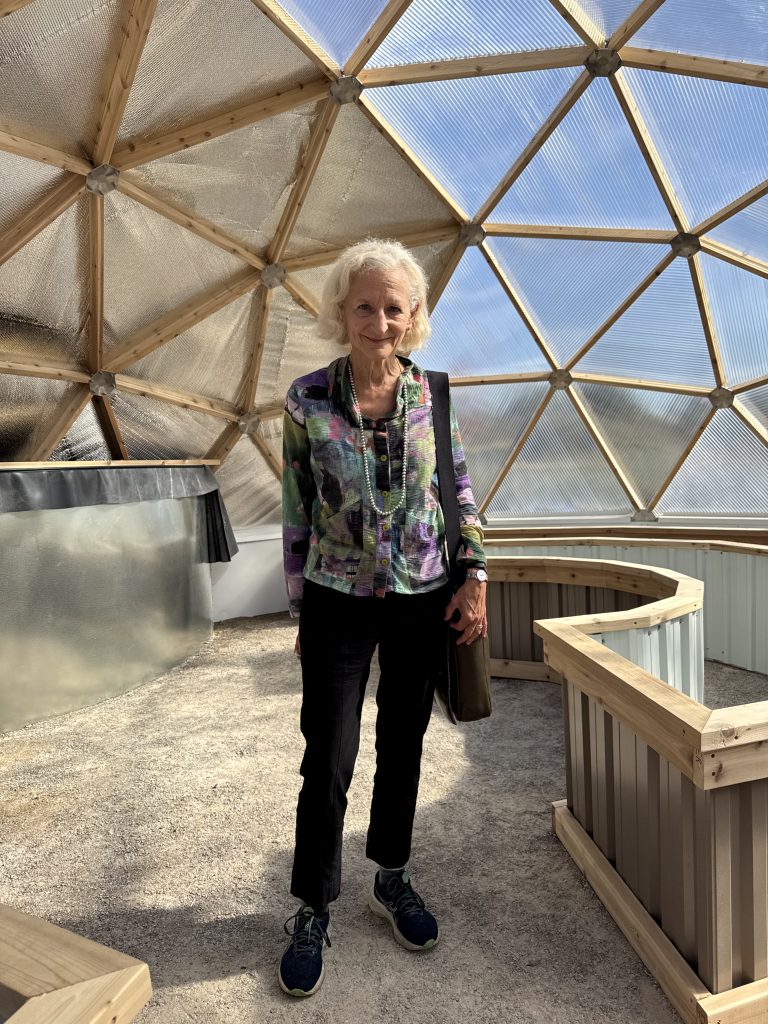
Dr. Sara Diamond is a Co-Director of Abundant Intelligences and co-leads the T’Karonto Pod with Peter Morin.
1. Can you tell us about your co-leadership with the T’Karonto Pod?
My talented and brilliant artist and philosopher co-investigator for the Toronto/Tkaronto pod is Archer Pechawis. We have a CfP (Abundant Intelligences’ funded project) that is based on the Dish with One Spoon towards Generous AI. It’s exploring the agreement between the Haudenosaunee and Anishinaabe peoples that supported sharing vital resources, including land, water, air, and fire, and keeping those resources intact. Bonnie Devine and Ruth West shared knowledge about the agreement with our Pod, and Susan Blight suggested we use this as a test of what was required of AI, both the creators and the algorithms. The Dish agreement required that if you remove something from the shared world, you had the responsibility of putting something back. It asked that you not only replenish the bowl but also keep it clean and healthy, so you wouldn’t foul the waters. The Dish extended to include other Indigenous people. Our Pod includes Cree and Dene researchers. This agreement became the framework between Indigenous peoples and settlers, and was consolidated through Wampum belts that were visually powerful contractual agreements. However, settlers often broke the agreement.
We are exploring whether this framework, if it is respected and if the agreements are bound to, is a good way of thinking about the characteristics of AI and the kinds of relationships that are needed to develop Indigenous-led AI. These qualities include: being appropriate for place, reciprocity, relationships, and replenishment. So we are holding conversations with individuals and/or organizations from Indigenous communities to explore these ideas in relation to AI. We also led a series of workshops that looked at language models and 2D/3D visualization tools, and we are planning to roll out a whole series of conversations and workshops and hackathons.
We have a set of partners who represent Indigenous arts and cultural organizations and also work inside non-Indigenous organizations or represent both the AI sector in Toronto and GLAM (Galleries, Libraries, Archives, and Museums). We’re still looking at how we can work together with those organizations to support their needs and interest in AI and also expand some of the current research work inside of our Pod.
I am challenged to not be reductionist in trying to describe the breadth of research in our pod, which thread back to the principles of the Dish philosophy. Archer Pechawis is just starting a robotic trickster project and continues to lead us in Indigenous philosophical perspectives on AI. Dr. Ruth Green is a leading social work educator and policy leader who applies the Mohawk concept of Onkwehonwe in her pedagogy, including their practices of storytelling, experiential learning, and reciprocal relationship building, and brings her wisdom to the group. Bonnie Devine, Anishinaabe artist, knowledge keeper, and writer provides guidance. Some highlights of the Pod’s research: Andrew McConnell looks at small language models that could be safe containers for Indigenous knowledge including published works, stories, and other forms. Dr. Maya Chacaby leads a major project on language learning, including an immersive game that uses JSON and other programming tools to create two complementary approaches: on the one hand, protecting Indigenous knowledge, and on the other, developing computational abilities in both graphics and LLMs https://www.biskaabiiyaang.com/learn-more .We have a Pod member, Shak Gobert, who is building Indigenous Augmented Reality; he is looking at how to use AI to inform that work. Leah Shenandoah focuses on Indigenous fashion and textiles and materials, and SJ Okemow draws from medical illustration, Indigenous philosophy and understanding the Indigenous body, and Peter Morin is exploring history and memory and storytelling in embodied ways, investigating dreaming as a methodology. His work also empowers access to Indigenous collections through digitization and expanded access. Archer is just starting a robotic trickster project. RA Orus Mateo Castaño-Suárez built beautiful knowledge graphs using advanced visual computation replenished by Indigenous and spiritual world views. RA Ostoro Petahtegoose creates beautiful copper bowls that will have network capacity and celebrate the rethinking of extracting of copper as a medium through an Indigenous context. We are looking at those areas of research and how they combine and connect. We are a new Pod.
My own research spans a number of different areas. I have created the Canadian Cultural Data Catalogue https://www.culturaldata.ca/ , which is a guide to all manner of cultural data sets and databases. It’s a means of supporting researchers and organizations to use data respectfully and effectively to understand the history of arts and cultures, as well as their current state and future. We apply OCAP principles to identify Indigenous data, its provenance, and the rights associated with it. This work has direct relevance to AbInt. I’ve also been doing a lot of work building toolsets to support equitable, inclusive urban planning, working with cities and developers, including looking at the importance of cultural spaces and places within urban planning and other characteristics, including Indigenous placekeeping within urban planning, affordability, and resources for healthy communities. There are some opportunities to take that work and intensify its connections with Indigenous collaborators in AbInt. I finished a project that developed qualitative research tools to evaluate the impact of screen media and I am now a part of a project that is looking at broader frameworks to evaluate arts and culture, in terms of health and wellbeing, supporting immigrant experiences, equity and inclusion, and environmental sustainability. This project is relevant to Abundant Intelligences.
2. What inspired you to explore the Dish with One Spoon as a framework?
In our very, really formative dialogues about the Pod, Susan Blight (a former researcher), Bonnie Devine, (a Pod Advisor and Mentor), and Ruth West (a current researcher), began the discussion of a Dish with One Spoon as a framework for the territory. We were seeking something that was grounded in this place, and it was a really rich, logical possibility. We are testing it, we are not saying this is right. In part because agreements have been broken. We are recognizing risk within this framework. But that’s where it started, it was about being grounded in place. A lot of the values that one would want to have in an AI system are values of a Dish with One Spoon including attention to environmental impact as well as sharing and building systems that are collaborative, supportive, and community-based rather than about individual identities.
3. What methods or approaches are you using to carry out your research?
Maya Chacaby’s work is deeply grounded in community with Advisory by a team of Elders, with great care to archives and content that is ceremonial or Indigenous language based, with respect for the structure of Anishinaabemowin and with attention to ceremony as a starting point. Both Maya and Archer have a fifth column approach to existing technologies. How do you use them, break them, and rethink them? That’s a shared perspective within the Pod as well.
4. How has Abundant Intelligences helped with this research or project?
I think the research-sharing process, the looking for connections across the network, and that ability to mobilize talent from different places for problem-solving, invention, and creation is a feature that already exists and will only be amplified going forward.
5. How do you hope your research will make a difference — in your field, community, or in the wider world?
Our partners include Indigenous Fashion Arts and ImagineNative. These are two really impactful arts and cultural organizations that are interested in ways of building and managing their own archives and the use of AI in creative practices. A cross-cutting theme is the importance of accessing historical materials from archives and collections, and how to interpret and reinterpret these. I think there’s a really great opportunity to work with them in both an AI invention and AI application approaches, thinking through an Indigenous lens and through methodologies to support that emerging fashion and craft practice in Canada and media creation. I am interested in renewing a research project Crossing Fonds, which created an alternative digital archival platform with Dana Claxton, Andrea Fatona, Karen Knights, and archivist collaborators. It is meant to encourage critical archival practices and sharing of reinterpretation https://crossingfonds.com/ where materials could be shared, commented on, and put in relation to one another, analyzed, and navigated, where metadata could potentially be rewritten by community. I am very interested in continuing that work, and I think there’s something there that is relevant to the archival work our network is doing and to our partners.
We are in Toronto/T’karonto, there’s a lot of adjacent AI research happening in the city. I am hoping that, over time, we can create those relationships and connections and share Indigenous methodologies and technical developments and outcomes for larger collaborations. I am hoping we can impact policy and how Indigenous data is understood, whether it’s in the university system, not-for-profit, or commercial applications. So, our Pod has done some public speaking, and we will continue to intensify our outreach. We were recently, with our internal colleagues, featured at the Connected Minds Symposium, which was a really great opportunity to look at data sovereignty and how to effectively engage with Indigenous data, including in the design of AI.
By:
Sabrina Smith
Date:
December 8, 2025
Location:
T'Karonto, Ontario
Five Minutes With Sara Diamond: Designing AI That Gives Back
By:
Sabrina Smith
Date:
December 8, 2025
Location:
T'Karonto, Ontario
Reframing AI through the Haudenosaunee and Anishinaabe Dish with One Spoon Agreement.
Dr. Sara Diamond is a Co-Director of Abundant Intelligences and co-leads the T’Karonto Pod with Peter Morin.
1. Can you tell us about your co-leadership with the T’Karonto Pod?
My talented and brilliant artist and philosopher co-investigator for the Toronto/Tkaronto pod is Archer Pechawis. We have a CfP (Abundant Intelligences’ funded project) that is based on the Dish with One Spoon towards Generous AI. It’s exploring the agreement between the Haudenosaunee and Anishinaabe peoples that supported sharing vital resources, including land, water, air, and fire, and keeping those resources intact. Bonnie Devine and Ruth West shared knowledge about the agreement with our Pod, and Susan Blight suggested we use this as a test of what was required of AI, both the creators and the algorithms. The Dish agreement required that if you remove something from the shared world, you had the responsibility of putting something back. It asked that you not only replenish the bowl but also keep it clean and healthy, so you wouldn’t foul the waters. The Dish extended to include other Indigenous people. Our Pod includes Cree and Dene researchers. This agreement became the framework between Indigenous peoples and settlers, and was consolidated through Wampum belts that were visually powerful contractual agreements. However, settlers often broke the agreement.
We are exploring whether this framework, if it is respected and if the agreements are bound to, is a good way of thinking about the characteristics of AI and the kinds of relationships that are needed to develop Indigenous-led AI. These qualities include: being appropriate for place, reciprocity, relationships, and replenishment. So we are holding conversations with individuals and/or organizations from Indigenous communities to explore these ideas in relation to AI. We also led a series of workshops that looked at language models and 2D/3D visualization tools, and we are planning to roll out a whole series of conversations and workshops and hackathons.
We have a set of partners who represent Indigenous arts and cultural organizations and also work inside non-Indigenous organizations or represent both the AI sector in Toronto and GLAM (Galleries, Libraries, Archives, and Museums). We’re still looking at how we can work together with those organizations to support their needs and interest in AI and also expand some of the current research work inside of our Pod.
I am challenged to not be reductionist in trying to describe the breadth of research in our pod, which thread back to the principles of the Dish philosophy. Archer Pechawis is just starting a robotic trickster project and continues to lead us in Indigenous philosophical perspectives on AI. Dr. Ruth Green is a leading social work educator and policy leader who applies the Mohawk concept of Onkwehonwe in her pedagogy, including their practices of storytelling, experiential learning, and reciprocal relationship building, and brings her wisdom to the group. Bonnie Devine, Anishinaabe artist, knowledge keeper, and writer provides guidance. Some highlights of the Pod’s research: Andrew McConnell looks at small language models that could be safe containers for Indigenous knowledge including published works, stories, and other forms. Dr. Maya Chacaby leads a major project on language learning, including an immersive game that uses JSON and other programming tools to create two complementary approaches: on the one hand, protecting Indigenous knowledge, and on the other, developing computational abilities in both graphics and LLMs https://www.biskaabiiyaang.com/learn-more .We have a Pod member, Shak Gobert, who is building Indigenous Augmented Reality; he is looking at how to use AI to inform that work. Leah Shenandoah focuses on Indigenous fashion and textiles and materials, and SJ Okemow draws from medical illustration, Indigenous philosophy and understanding the Indigenous body, and Peter Morin is exploring history and memory and storytelling in embodied ways, investigating dreaming as a methodology. His work also empowers access to Indigenous collections through digitization and expanded access. Archer is just starting a robotic trickster project. RA Orus Mateo Castaño-Suárez built beautiful knowledge graphs using advanced visual computation replenished by Indigenous and spiritual world views. RA Ostoro Petahtegoose creates beautiful copper bowls that will have network capacity and celebrate the rethinking of extracting of copper as a medium through an Indigenous context. We are looking at those areas of research and how they combine and connect. We are a new Pod.
My own research spans a number of different areas. I have created the Canadian Cultural Data Catalogue https://www.culturaldata.ca/ , which is a guide to all manner of cultural data sets and databases. It’s a means of supporting researchers and organizations to use data respectfully and effectively to understand the history of arts and cultures, as well as their current state and future. We apply OCAP principles to identify Indigenous data, its provenance, and the rights associated with it. This work has direct relevance to AbInt. I’ve also been doing a lot of work building toolsets to support equitable, inclusive urban planning, working with cities and developers, including looking at the importance of cultural spaces and places within urban planning and other characteristics, including Indigenous placekeeping within urban planning, affordability, and resources for healthy communities. There are some opportunities to take that work and intensify its connections with Indigenous collaborators in AbInt. I finished a project that developed qualitative research tools to evaluate the impact of screen media and I am now a part of a project that is looking at broader frameworks to evaluate arts and culture, in terms of health and wellbeing, supporting immigrant experiences, equity and inclusion, and environmental sustainability. This project is relevant to Abundant Intelligences.
2. What inspired you to explore the Dish with One Spoon as a framework?
In our very, really formative dialogues about the Pod, Susan Blight (a former researcher), Bonnie Devine, (a Pod Advisor and Mentor), and Ruth West (a current researcher), began the discussion of a Dish with One Spoon as a framework for the territory. We were seeking something that was grounded in this place, and it was a really rich, logical possibility. We are testing it, we are not saying this is right. In part because agreements have been broken. We are recognizing risk within this framework. But that’s where it started, it was about being grounded in place. A lot of the values that one would want to have in an AI system are values of a Dish with One Spoon including attention to environmental impact as well as sharing and building systems that are collaborative, supportive, and community-based rather than about individual identities.
3. What methods or approaches are you using to carry out your research?
Maya Chacaby’s work is deeply grounded in community with Advisory by a team of Elders, with great care to archives and content that is ceremonial or Indigenous language based, with respect for the structure of Anishinaabemowin and with attention to ceremony as a starting point. Both Maya and Archer have a fifth column approach to existing technologies. How do you use them, break them, and rethink them? That’s a shared perspective within the Pod as well.
4. How has Abundant Intelligences helped with this research or project?
I think the research-sharing process, the looking for connections across the network, and that ability to mobilize talent from different places for problem-solving, invention, and creation is a feature that already exists and will only be amplified going forward.
5. How do you hope your research will make a difference — in your field, community, or in the wider world?
Our partners include Indigenous Fashion Arts and ImagineNative. These are two really impactful arts and cultural organizations that are interested in ways of building and managing their own archives and the use of AI in creative practices. A cross-cutting theme is the importance of accessing historical materials from archives and collections, and how to interpret and reinterpret these. I think there’s a really great opportunity to work with them in both an AI invention and AI application approaches, thinking through an Indigenous lens and through methodologies to support that emerging fashion and craft practice in Canada and media creation. I am interested in renewing a research project Crossing Fonds, which created an alternative digital archival platform with Dana Claxton, Andrea Fatona, Karen Knights, and archivist collaborators. It is meant to encourage critical archival practices and sharing of reinterpretation https://crossingfonds.com/ where materials could be shared, commented on, and put in relation to one another, analyzed, and navigated, where metadata could potentially be rewritten by community. I am very interested in continuing that work, and I think there’s something there that is relevant to the archival work our network is doing and to our partners.
We are in Toronto/T’karonto, there’s a lot of adjacent AI research happening in the city. I am hoping that, over time, we can create those relationships and connections and share Indigenous methodologies and technical developments and outcomes for larger collaborations. I am hoping we can impact policy and how Indigenous data is understood, whether it’s in the university system, not-for-profit, or commercial applications. So, our Pod has done some public speaking, and we will continue to intensify our outreach. We were recently, with our internal colleagues, featured at the Connected Minds Symposium, which was a really great opportunity to look at data sovereignty and how to effectively engage with Indigenous data, including in the design of AI.