

Back to news
Epistemological Foundations Conversation on the Policy and Governance of AI
This session will bring together Kamuela Enos, Fenwick McKelvey, and Maroussia Lévesque to discuss policy and governance of AI, addressing how decision-making structures, regulatory frameworks, and governance models shape the development and deployment of AI technologies. Our experienced panelists will consider how their work contributes to uncovering and shaping the conditions under which AI operates.
In this discussion, we will consider how Indigenous epistemologies can inform AI governance, moving beyond dominant paradigms to embrace relational, land-based, and community-centered approaches. What does it mean to govern AI in ways that uphold Indigenous sovereignty, data governance, and self-determination? How can policy frameworks integrate principles of relational accountability, respect for more-than-human intelligence, and collective consent?
June 4, 2025
5:30pm – 7:00pm EDT
11:30am – 1:00pm HST
2:30pm – 4:00pm PDT
3:30pm – 5:00pm MDT
June 5, 2025
9:30am – 11:00am NZST
This will by a hybrid event. To join remotely, paste the following link into your address bar:
https://concordia-ca.zoom.us/j/87856944638
There will be an in-person session in Montreal that will take place at the Milieux Institute’s Speculative Life Research Room (EV 10.625), in the Concordia EV Building, 1515 Saint-Catherine St W.
In-person attendance in Montreal requires RSVP confirmation by email at abint-activities@concordia.ca.
Epistemological Foundations Conversation Series
This only shows up because there is something written in the Epistemological Foundations Conversation Series’ category’s description.
Event
Impact
Co-investigator Feature
Conference / panel
Speakers:
Maroussia Levesque
Fenwick McKelvey
Éliane Ubalijoro
Kamuela Enos
Ceyda Yolgörmez
Date:
2025-06-04
Location:
Canada
Featured People
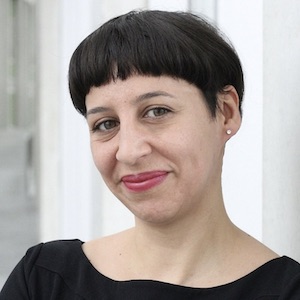
Maroussia Levesque
Maroussia is a doctoral candidate at Harvard Law School, a Senior Fellow at the Center for International Governance Innovation, and a member of the Indigenous Protocol and Artificial Intelligence working group. Building on previous work on AI and human rights at Global Affairs Canada (foreign affairs department), she currently researches AI governance, and co-leads a working group on the matter at Berkman Klein. Her academic and creative work has been featured in NeurIPS, Stem Cell Review and Reports, and ISEA. Maroussia previously worked for Quebec’s public inquiry commission on electronic surveillance and clerked for the Chief Justice at the Quebec Court of Appeal, and volunteered on gender-based violence and criminal matters in Haiti (Lawyers Without Borders) and on digital literacy in Brazil (Alternatives). She holds degrees from Harvard, McGill, and Concordia University.

Fenwick McKelvey
Fenwick McKelvey is an Associate Professor of Information and Communication Technology Policy in the Department of Communication Studies at Concordia University. He is co-associate director of the Milieux Institute, leads Machine Agencies, and serves as Director of the Algorithmic Media Observatory. He is the author of Internet Daemons: Digital Communications Possessed (University of Minnesota Press, 2018), which won the 2019 Gertrude J. Robinson Book Award, and co-author of The Permanent Campaign: New Media, New Politics (Peter Lang, 2012) with Greg Elmer and Ganaele Langlois. McKelvey frequently appears as an expert commentator in the media and has intervened in media regulatory hearings. He is also a member of the Educational Review Committee of The Walrus magazine. His research focuses on digital politics and policy, and he contributes expertise in digital infrastructures, algorithms, bots, and artificial intelligence in relation to Internet policy and governance.
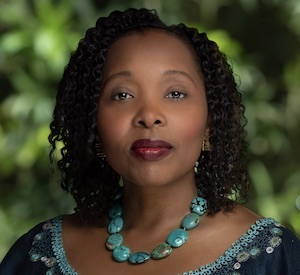
Éliane Ubalijoro
Dr. Éliane Ubalijoro is the CIFOR-ICRAF Chief Executive Officer and ICRAF Director General (DG). A Rwandan Canadian scientist and executive, her decades of experience span academia, science-policy and the non-profit and international development sectors. She is also a Professor of Practice for Public-Private Sector Partnerships at McGill University’s Institute for the Study of International Development. Ubalijoro serves on numerous international advisory and governance bodies, including the Impact Advisory Board of the Global Alliance for a Sustainable Planet; Rwanda’s National Science and Technology Council; and the Presidential Advisory Council to President Paul Kagame, on which she has served since its inception in 2007. Her global policy expertise extends to the Expert Consultation Group on the post-COVID-19 implications for collaborative governance of genomics research and innovation, as well as the African Development Bank’s Expert Global Community of Practice on COVID-19 response strategies in Africa. She also serves on the Supervisory Board of the Capitals Coalition and on the advisory boards of the Earth Leadership Program, ShEquity, and Orango Investment Corporation, and sits on the boards of Genome Canada and the Crop Trust. She will contribute expertise on how locally-grounded science and technology research can be translated into effective governing and funding policies.
Kamuela Enos
Kamuela Enos (Kānaka Maoli) is founder of UH’s Office of Indigenous Innovation, which identifies, researches, and scales traditional practices for the benefit of Indigenous communities. The former director of social enterprise at MA‘O Organic Farms, he has extensive experience in revitalizing ancestral agricultural practices. He will contribute to the development of meaningful and co-generative collaboration with Indigenous communities around new technologies. He will contribute to the development of meaningful and co-generative collaboration with Indigenous communities around new technologies.

Ceyda Yolgörmez
Ceyda Yolgörmez is a Postdocoral Researcher at the Indigenous Futures Research Cluster, working in the Abundant Intelligences Research Program. Her PhD work brought together social theory and interactive technologies, such as large machine learning models or social robots, to consider how our conceptions of the social are changing. Her PhD dissertation proposes a framework for a sociology of machines that reimagines human-machine relations. Her research looks at playful and creative engagements with machines as a site to explore and experiment with human machine socialities, and is interested in methodologies that reveal and trouble the common-sensical way in which we understand such relations.